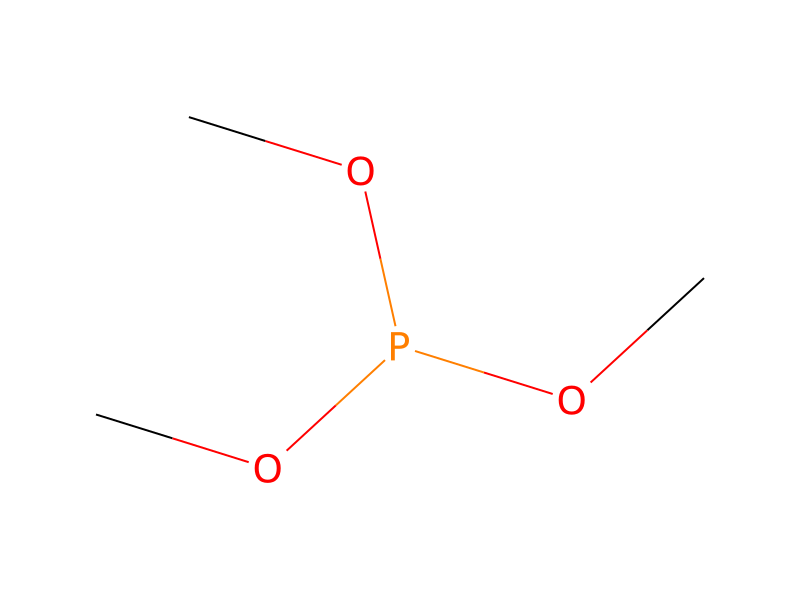
Trimethyl phosphite → HCID 14877956, compound
Reaction equation

[F:1][C:2]1[CH:7]=[CH:6][C:5]([C:8]([C:17]2[CH:22]=[CH:21][C:20]([F:23])=[CH:19][CH:18]=2)=[C:9]([N:12]2[CH:16]=[N:15][N:14]=[N:13]2)[CH2:10]Br)=[CH:4][CH:3]=1.[CH3:24][O:25][P:26]([O:29]C)[O:27][CH3:28]>>[F:1][C:2]1[CH:7]=[CH:6][C:5]([C:8]([C:17]2[CH:22]=[CH:21][C:20]([F:23])=[CH:19][CH:18]=2)=[C:9]([N:12]2[CH:16]=[N:15][N:14]=[N:13]2)[CH2:10][P:26](=[O:29])([O:27][CH3:28])[O:25][CH3:24])=[CH:4][CH:3]=1Participants
3


Procedure
A suspension of 3,3-bis(4-fluorophenyl)-1-bromo-2-(tetrazol-1-yl)-2-propene (108 mg, 0.29 mmol) and trimethylphosphite (4 mL, 34 mmol) was heated to reflux under an inert atmosphere for five minutes. After cooling to room temperature, excess trimethylphosphite was evaporated under reduced pressure to give a pale crystalline material. The crude product was crystallized from a 10:1 mixture of hexanes: ethyl acetate to give 98 mg (83%) of the title compound as rhombic, colorless crystals; m.p.=132.8°-133.7° C.
Workup
- temperaturewas heated
- temperatureto reflux under an inert atmosphere for five minutes
- customexcess trimethylphosphite was evaporated under reduced pressure
- customto give a pale crystalline material
- customThe crude product was crystallized from a 10:1 mixture of hexanes
Sources & evidence
- ORD record
- ord-26af40d564114e62badadb4364b80c23
- Source dataset
- uspto-grants-1991_12
- Patent number
- US05070206
Reaction notes
Loading…