Formaldehyde → HCID 15881114, compound
Reaction equation

[Br:1][C:2]1[CH:3]=[C:4]2[C:8](=[CH:9][CH:10]=1)[NH:7][CH:6]=[CH:5]2.[CH3:11][C:12]1([CH3:20])[O:19][C:17](=[O:18])[CH2:16][C:14](=[O:15])[O:13]1.N1CCC[C@H:22]1C(O)=O.C=O>C(#N)C>[CH3:11][C:12]1([CH3:20])[O:19][C:17](=[O:18])[CH:16]([CH2:22][C:5]2[C:4]3[C:8](=[CH:9][CH:10]=[C:2]([Br:1])[CH:3]=3)[NH:7][CH:6]=2)[C:14](=[O:15])[O:13]1Participants
6
Reactant 4



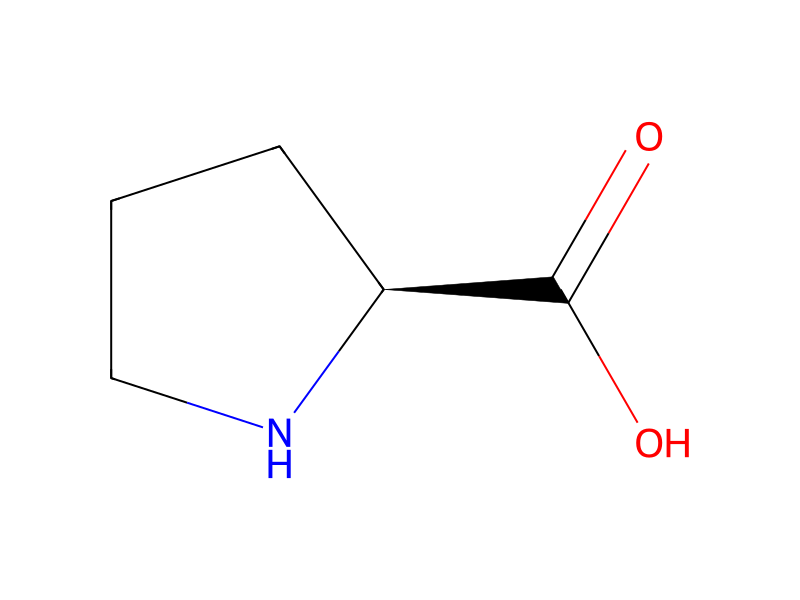
Product 1

Reagents, catalysts & solvents 1

Procedure
A solution of 5-bromoindole (10.07 g, 51 mmol), Meldrum's acid (7.38 g, 51 mmol), proline (1.24 g), and 5.2 ml of 30% aqueous formaldehyde in 100 ml of acetonitrile was allowed to stand at room temperature for 24 hours. The acetonitrile was removed in vacuo. Crystallization of the product from methanol (50 ml) provided 15.83 g of 3-(2,2-dimethyl-4,6-dioxo-1,3-dioxane-5-yl)methyl-5-bromoindole as a white solid.
Workup
- customThe acetonitrile was removed in vacuo
- customCrystallization of the product from methanol (50 ml)
Sources & evidence
- ORD record
- ord-ae92c0f1983649649f18a011a7b183c9
- Source dataset
- uspto-grants-1991_12
- Patent number
- US05075313
Reaction notes
Loading…