Pyridine → HCID 10736881, compound
Reaction equation

[Cl:1][C:2]1[CH:11]=[C:10]2[C:5]([C:6](=[O:12])[CH2:7][CH2:8][NH:9]2)=[CH:4][CH:3]=1.N1C=CC=CC=1.[Cl:19][C:20]1[CH:28]=[C:27]([Cl:29])[CH:26]=[CH:25][C:21]=1[C:22](Cl)=[O:23]>O1CCOCC1>[Cl:1][C:2]1[CH:11]=[C:10]2[C:5]([C:6](=[O:12])[CH2:7][CH2:8][N:9]2[C:22](=[O:23])[C:21]2[CH:25]=[CH:26][C:27]([Cl:29])=[CH:28][C:20]=2[Cl:19])=[CH:4][CH:3]=1Participants
5
Reactant 3

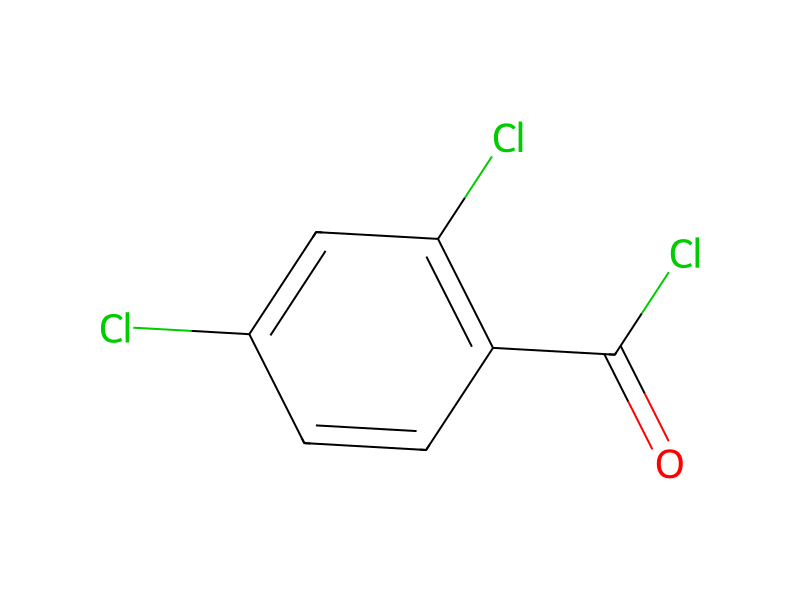

Product 1

Reagents, catalysts & solvents 1

Procedure
To a mixture of 7-chloro-2,3-dihydro-4(1H)-quinolinone (25 g), pyridine (32 g) and dioxane (200 ml) was added 2,4-dichlorobenzoylchloride (37 g) dropwise under cooling at 0° C. to 5° C. with stirring. The mixture was allowed to react at room temperature for additional 3 hours. The reaction mixture was subjected to the procedure described in example 2, and 43 g of 7-chloro-1-(2,4-dichlorobenzoyl)-2,3-dihydro-4-(1H)-quinolinone was obtained as white crystal.
Workup
- temperatureunder cooling at 0° C. to 5° C.
- customto react at room temperature for additional 3 hours
Sources & evidence
- ORD record
- ord-89bf86aeefb14653afe4339405b13623
- Source dataset
- uspto-grants-1991_12
- Patent number
- US05077410
Reaction notes
Loading…