Propylamine → 2,3-Pyrazinedicarbonitrile, 5-(3-chlorophenyl)-6-(propylamino)-
Reaction equation

[C:1]([C:3]1[C:8]([C:9]#[N:10])=[N:7][C:6](Cl)=[C:5]([C:12]2[CH:17]=[CH:16][CH:15]=[C:14]([Cl:18])[CH:13]=2)[N:4]=1)#[N:2].[CH2:19]([NH2:22])[CH2:20][CH3:21].[OH-].[Na+]>>[C:1]([C:3]1[C:8]([C:9]#[N:10])=[N:7][C:6]([NH:22][CH2:19][CH2:20][CH3:21])=[C:5]([C:12]2[CH:17]=[CH:16][CH:15]=[C:14]([Cl:18])[CH:13]=2)[N:4]=1)#[N:2]Participants
4
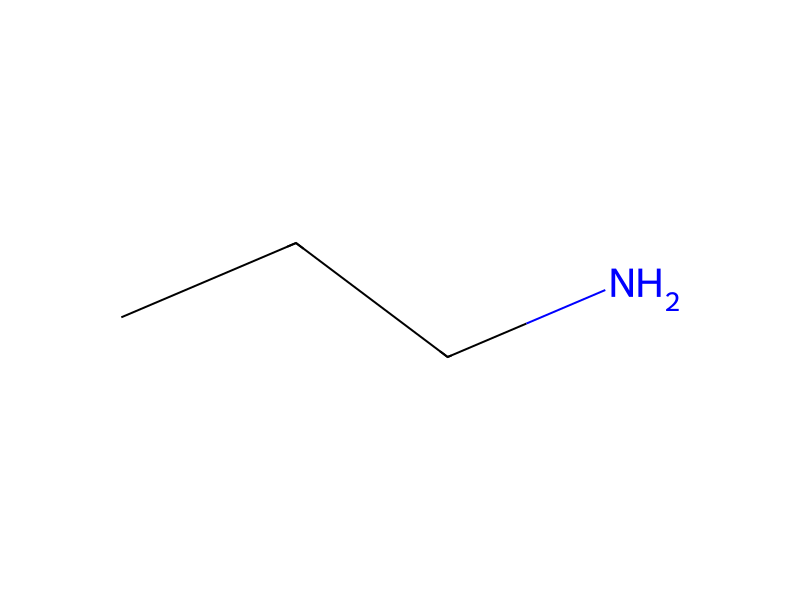



Procedure
2,3-Dicyano-5-chloro-6-(m-chlorophenyl)pyrazine (1.0 g; 0.0036 mole), 0.24 g (0.004 mole) of n-propylamine and 40 ml of a 0.1N aqueous solution of sodium hydroxide were worked up in the same way as in Example 17, and recrystallized from methanol to afford 0.84 g (yield 78%) of 2,3-dicyano-5-n-propylamino-6-(m-chlorophenyl)pyrazine.
Workup
- customrecrystallized from methanol
Sources & evidence
- ORD record
- ord-6faf5726b29d4226a12d573807e2388e
- Source dataset
- uspto-grants-1984_07
- Patent number
- US04460403
Reaction notes
Loading…