1,4-Dibromobutane → HCID 13754417, compound
Reaction equation

[CH3:1][C:2]1([CH3:14])[NH:7][C:6](=[O:8])[C:5]2[CH:9]=[C:10]([OH:13])[CH:11]=[CH:12][C:4]=2[O:3]1.C(=O)([O-])[O-].[K+].[K+].[Br:21][CH2:22][CH2:23][CH2:24][CH2:25]Br>>[CH3:1][C:2]1([CH3:14])[NH:7][C:6](=[O:8])[C:5]2[CH:9]=[C:10]([O:13][CH2:25][CH2:24][CH2:23][CH2:22][Br:21])[CH:11]=[CH:12][C:4]=2[O:3]1Participants
4
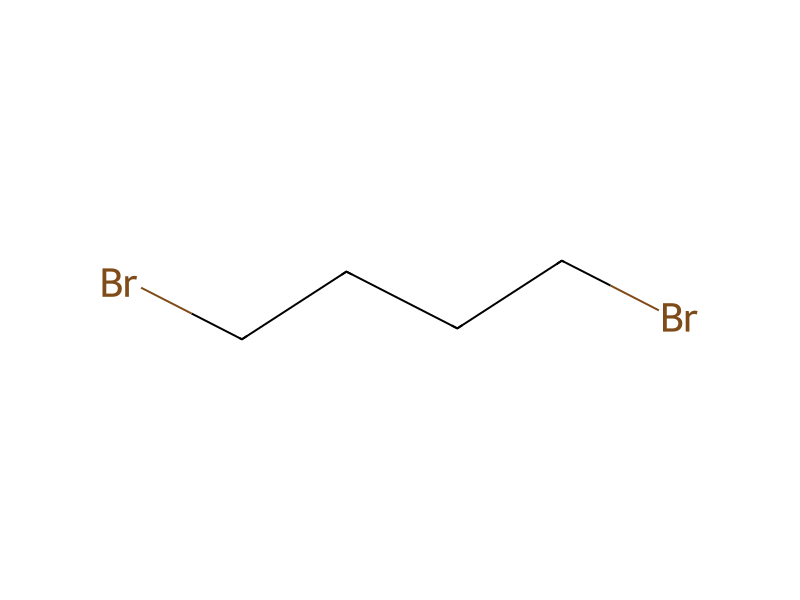



Procedure
A suspension of 96.5 g of 2,3-dihydro-2,2-dimethyl-6-hydroxy-4H-1,3-benzoxazin-4-one and 76 g of potassium carbonate in 300 ml of 1,4-dibromobutane is stirred for 5 hours in a bath at 120°-130°. The reaction mixture is filtered, and the excess 1,4-dibromobutane is distilled off at about 1 Torr. The crystalline residue is triturated with ether, and filtered off under suction. There is thus obtained crude 2,3-dihydro-2,2-dimethyl-6-(4-bromobutoxy)-4H-1,3-benzoxazin-4-one, m.p. 139°-142°, which is sufficiently pure for the further reaction.
Workup
- filtrationThe reaction mixture is filtered
- distillationthe excess 1,4-dibromobutane is distilled off at about 1 Torr
- customThe crystalline residue is triturated with ether
- filtrationfiltered off under suction
Sources & evidence
- ORD record
- ord-4bcc39c8b2624daf88c84dec54a660be
- Source dataset
- uspto-grants-1984_07
- Patent number
- US04460580
Reaction notes
Loading…