P-Toluic Acid → 3,5-Dichloro-4-methylbenzoic acid
Reaction equation

[CH3:1][C:2]1[CH:3]=[CH:4][C:5]([C:8]([OH:10])=[O:9])=[CH:6][CH:7]=1.[Cl-:11].[Al+3].[Cl-:13].[Cl-]>C(Cl)Cl>[Cl:11][C:3]1[CH:4]=[C:5]([CH:6]=[C:7]([Cl:13])[C:2]=1[CH3:1])[C:8]([OH:10])=[O:9]Participants
Reactant 2
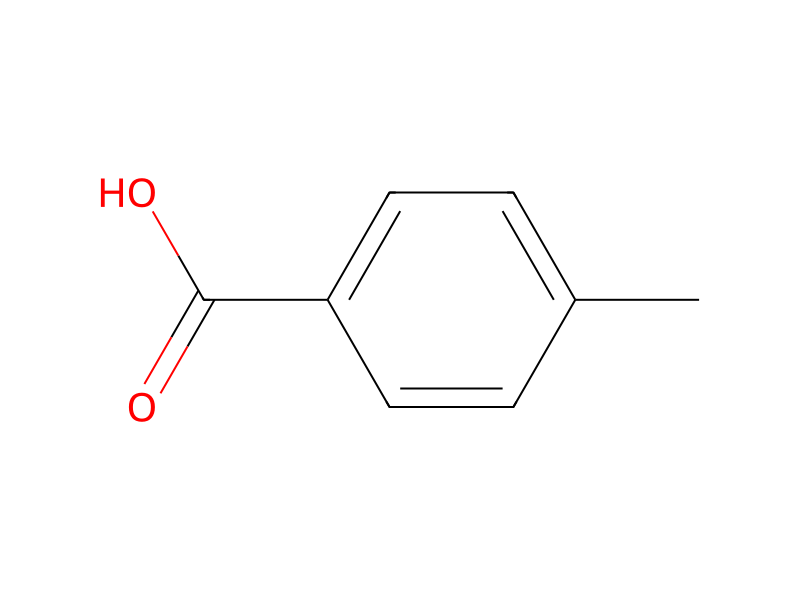

Product 1

Reagents, catalysts & solvents 1

Procedure
To a solution of p-toluic acid (95.0 g,0.698 mole) in methylene chloride (1 liter), was added aluminum chloride (260.0 g,1.948 mole), portionwise, while keeping the reaction temperature below 10° C. When the addition was completed, chlorine gas was bubbled in at such a rate as to keep the temperature below 10° C. The reaction was followed by GLC. After about 4 hours most of the starting material had been converted to the expected compound. The resulting mixture was poured into ice and concentrated hydrochloric acid, and then extracted with ethyl acetate several times. The combined organic layers were washed with water and then dried over anhydrous sodium sulfate. Removing the solvent in the rotavap yielded the crude product as a white solid. Recrystalization from acetone/water yielded 3,5-dichloro-4-methylbenzoic acid with minor impurities 115.4 g (81% yield of product).
Workup
- customthe reaction temperature below 10° C
- additionWhen the addition
- customchlorine gas was bubbled in at such a rate as
- customthe temperature below 10° C
- additionThe resulting mixture was poured into ice and concentrated hydrochloric acid
- extractionextracted with ethyl acetate several times
- washThe combined organic layers were washed with water
- dry with materialdried over anhydrous sodium sulfate
- customRemoving the solvent in the rotavap
- customyielded the crude product as a white solid
- customRecrystalization from acetone/water
Sources & evidence
- ORD record
- ord-bab1032a2d7b4faca934aa5ca93f69b5
- Source dataset
- uspto-grants-1994_04
- Patent number
- US05304572
Reaction notes
Loading…