Potassium Carbonate → tert-Butyl (R)-(1-(2-cyanobenzyl)piperidin-3-yl)carbamate
Reaction equation

[NH:1]1[CH2:6][CH2:5][CH2:4][C@@H:3]([NH:7][C:8](=[O:14])[O:9][C:10]([CH3:13])([CH3:12])[CH3:11])[CH2:2]1.C(=O)([O-])[O-].[K+].[K+].Br[CH2:22][C:23]1[CH:30]=[CH:29][CH:28]=[CH:27][C:24]=1[C:25]#[N:26]>>[C:25]([C:24]1[CH:27]=[CH:28][CH:29]=[CH:30][C:23]=1[CH2:22][N:1]1[CH2:6][CH2:5][CH2:4][C@@H:3]([NH:7][C:8](=[O:14])[O:9][C:10]([CH3:11])([CH3:13])[CH3:12])[CH2:2]1)#[N:26]Participants
4



Procedure
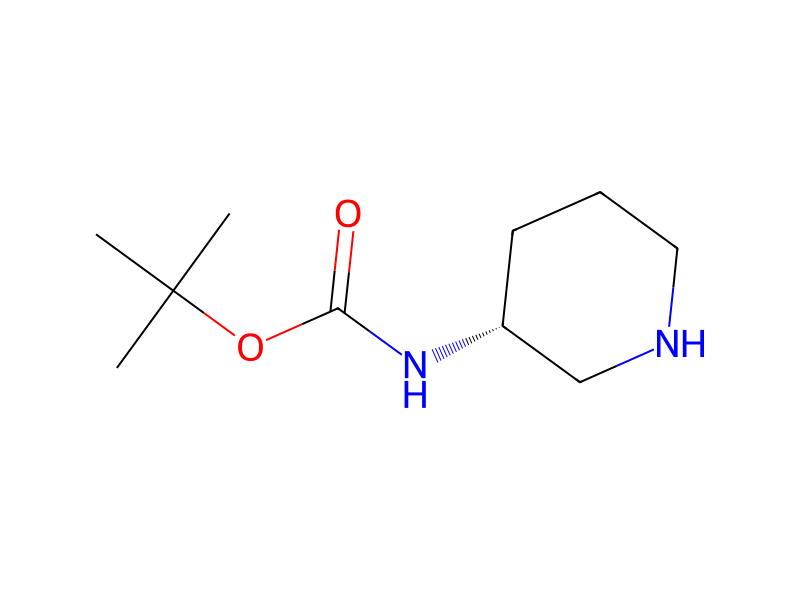
To a microwave vial equipped with a stir bar was added tert-butyl (3R)-piperidin-3-ylcarbamate (3000 mg, 14.98 mmol), Potassium Carbonate (6211 mg, 44.9 mmol), and 2-(bromomethyl)benzonitrile (3230 mg, 16.48 mmol). The vial was sealed and stirred at room temperature. The LCMS taken after 2.5 hours indicates the formation of the desired product. The crude reaction mixture was filtered and concentrated in vacuo. The material was dry loaded onto a 50 g column. The column was run from 100% dichloromethane to 15% methanol. The desired product eluted and the fractions were collected and concentrated in vacuo.
Workup
- customTo a microwave vial equipped with a stir bar
- customThe vial was sealed
Sources & evidence
- ORD record
- ord-132bf7ff0b5441878c395edc1c60daf3
- Source dataset
- uspto-grants-2015_04
- Patent number
- US08999957B2
Reaction notes
Loading…