Cyanogen Bromide → HCID 86717782, compound
Reaction equation

FC(F)(F)C(O)=O.[Br:8][C:9]1[CH:26]=[CH:25][C:12]([CH2:13][O:14][CH2:15][C@@H:16]2[CH2:18][C@@H:17]2[CH:19]2[CH2:24][CH2:23][NH:22][CH2:21][CH2:20]2)=[CH:11][CH:10]=1.[CH:27]([N:30](CC)C(C)C)(C)C.N#CBr>C(#N)C>[Br:8][C:9]1[CH:10]=[CH:11][C:12]([CH2:13][O:14][CH2:15][C@@H:16]2[CH2:18][C@@H:17]2[CH:19]2[CH2:24][CH2:23][N:22]([C:27]#[N:30])[CH2:21][CH2:20]2)=[CH:25][CH:26]=1Participants
5
Reactant 3
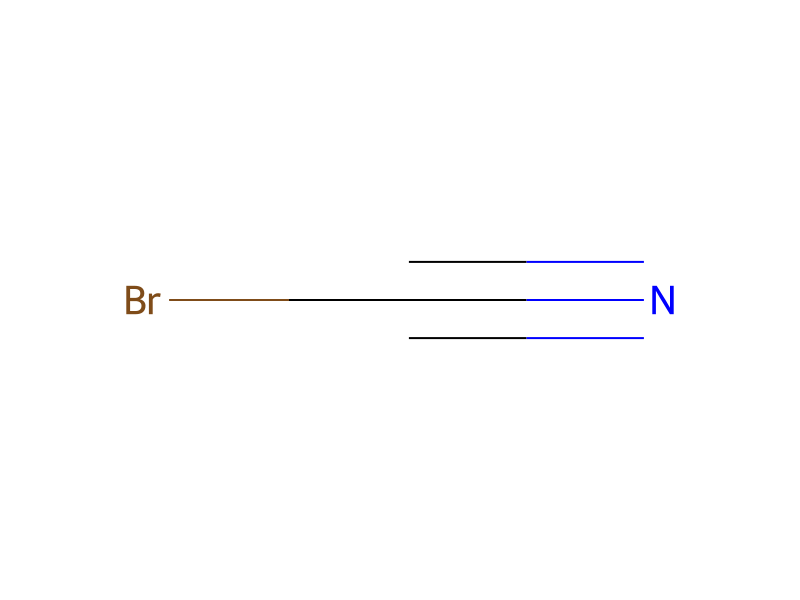


Product 1

Reagents, catalysts & solvents 1

Procedure
The product from step B (1.00 g, 3.08 mmol) and N,N-diisopropylethylamine (1.61 mL, 9.25 mmol) were dissolved in acetonitrile (20 mL). Cyanogen bromide (5M in acetonitrile, 0.746 mL, 3.7 mmol) was added and the reaction was stirred overnight at room temperature. The reaction was concentrated and the residue was partitioned between CH2Cl2 and water. The organic layer was saved and the aqueous layer was extracted with CH2Cl2. The organic layers were combined, washed with brine, dried over anhydrous MgSO4, filtered and evaporated to yield a crude material, which was purified by silica gel column chromatography (gradient elution 0% to 100% EtOAc in hexanes) to yield the title compound as a viscous oil.
Workup
- concentrationThe reaction was concentrated
- customthe residue was partitioned between CH2Cl2 and water
- extractionthe aqueous layer was extracted with CH2Cl2
- washwashed with brine
- dry with materialdried over anhydrous MgSO4
- filtrationfiltered
- customevaporated
- customto yield a crude material, which
- customwas purified by silica gel column chromatography (gradient elution 0% to 100% EtOAc in hexanes)
Sources & evidence
- ORD record
- ord-fc05dfe3715542179da1037e2a03b9be
- Source dataset
- uspto-grants-2015_04
- Patent number
- US09006228B2
Reaction notes
Loading…