Triethylamine → 4-(3,4-dihydro-2H-quinolin-1-yl)-6-(1H-pyrrolo[2,3-b]pyridin-5-yl)quinazoline
Reaction equation

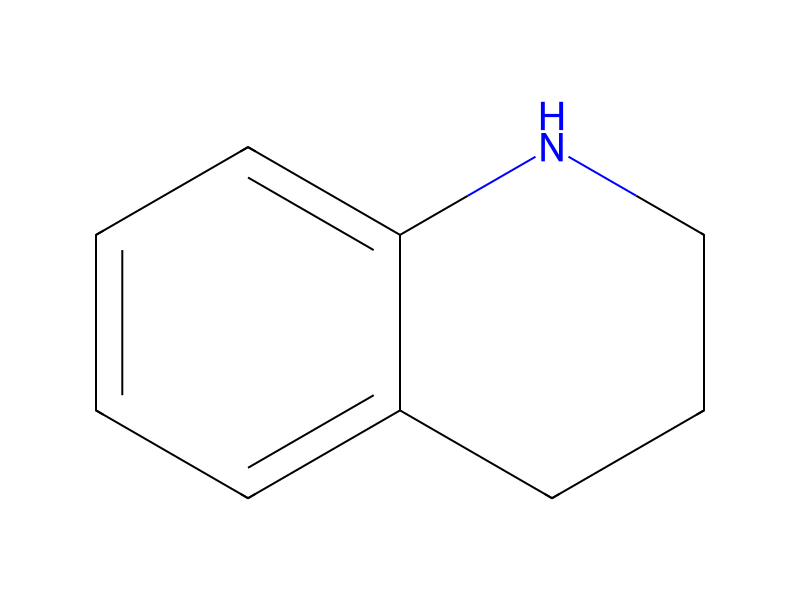
Cl[C:2]1[C:11]2[C:6](=[CH:7][CH:8]=[C:9](I)[CH:10]=2)[N:5]=[CH:4][N:3]=1.[NH:13]1[C:22]2[C:17](=[CH:18][CH:19]=[CH:20][CH:21]=2)[CH2:16][CH2:15][CH2:14]1.C(N(CC)CC)C.[N:30]1[C:39]2[C:34](=[CH:35][CH:36]=[CH:37][CH:38]=2)C=[N:32][CH:31]=1>O1CCOCC1>[N:13]1([C:2]2[C:11]3[C:6](=[CH:7][CH:8]=[C:9]([C:37]4[CH:36]=[C:35]5[CH:34]=[CH:39][NH:30][C:31]5=[N:32][CH:38]=4)[CH:10]=3)[N:5]=[CH:4][N:3]=2)[C:22]2[C:17](=[CH:18][CH:19]=[CH:20][CH:21]=2)[CH2:16][CH2:15][CH2:14]1Participants
6





Procedure
0.50 g of 4-chloro-6-iodoquinazoline, 0.30 g of 1,2,3,4-tetrahydroquinoline and 0.40 ml of triethylamine in 4 ml of dioxane are heated at 80° C. in a flask until the quinazoline has reacted completely (HPLC check, about 24 hours). The cooled reaction solution is evaporated to dryness in a rotary evaporator. The residue is purified by means of column chromatography (gradient heptane: EA 5-100% in 16 min.), giving 0.27 g of 4-(3,4-dihydro-2H-quinolin-1-yl)-6-(1H-pyrrolo[2,3-b]pyridin-5-yl)quinazoline as yellow solid (yield 43%, content 96%); MS-FAB (M+H+)=387.8; Rf (polar method): 2.43 min.
Workup
- customhas reacted completely (HPLC check, about 24 hours)
- customThe cooled reaction solution
- customis evaporated to dryness in a rotary evaporator
- customThe residue is purified by means of column chromatography (gradient heptane: EA 5-100% in 16 min.)
Sources & evidence
- ORD record
- ord-a00e3a0d7fe2431e8d78d398f21c232f
- Source dataset
- uspto-grants-2015_04
- Patent number
- US09006255B2
Reaction notes
Loading…