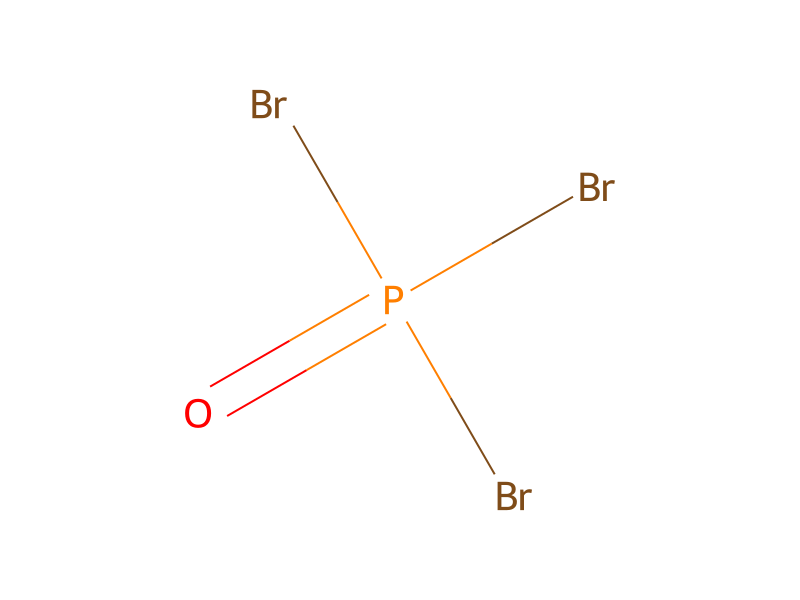
Phosphorus oxybromide → HCID 86687559, compound
Reaction equation

[CH2:1]([S:8][C:9]1[CH:18]=[C:17]2[C:12]([C:13](O)=[CH:14][CH:15]=[N:16]2)=[CH:11][N:10]=1)[C:2]1[CH:7]=[CH:6][CH:5]=[CH:4][CH:3]=1.P(Br)(Br)([Br:22])=O>C(#N)C>[CH2:1]([S:8][C:9]1[CH:18]=[C:17]2[C:12]([C:13]([Br:22])=[CH:14][CH:15]=[N:16]2)=[CH:11][N:10]=1)[C:2]1[CH:7]=[CH:6][CH:5]=[CH:4][CH:3]=1Participants
Reactant 2

Product 1

Reagents, catalysts & solvents 1

Conditions
- Temperature
- 65 °C
Procedure
To a flask fitted with a reflux condenser was added 7-(benzylthio)-1,6-naphthyridin-4-ol (0.160 g, 0.596 mmol) followed by acetonitrile (2 mL) and phosphorous oxybromide (0.121 mL, 1.193 mmol). The reaction was heated to 65° C. for 1 hour. The reaction was cooled to room temperature and quenched with aqueous sodium bicarbonate (20 mL) and was washed with DCM (20 mL×3). The organic layers were combined, dried over magnesium sulfate, filtered and concentrated. The resulting material was purified via silica gel MPLC (40 g), eluting with 0% to 100% ethyl acetate in heptanes. The fractions were collected and the solvent was removed under reduced pressure to provide 0.145 g of 7-(benzylthio)-4-bromo-1,6-naphthyridine as a yellow solid. m/z (ESI) 333.0 (M+H)+.
Workup
- customTo a flask fitted with a reflux condenser
- temperatureThe reaction was cooled to room temperature
- customquenched with aqueous sodium bicarbonate (20 mL)
- washwas washed with DCM (20 mL×3)
- dry with materialdried over magnesium sulfate
- filtrationfiltered
- concentrationconcentrated
- customThe resulting material was purified via silica gel MPLC (40 g)
- washeluting with 0% to 100% ethyl acetate in heptanes
- customThe fractions were collected
- customthe solvent was removed under reduced pressure
Sources & evidence
- ORD record
- ord-12beb3443803462596d7596d101422e7
- Source dataset
- uspto-grants-2015_04
- Patent number
- US09012443B2
Reaction notes
Loading…