Lithium hydroxide, monohydrate → 6-Oxo-1-phenyl-1,6-dihydropyridine-3-carboxylic acid
Reaction equation

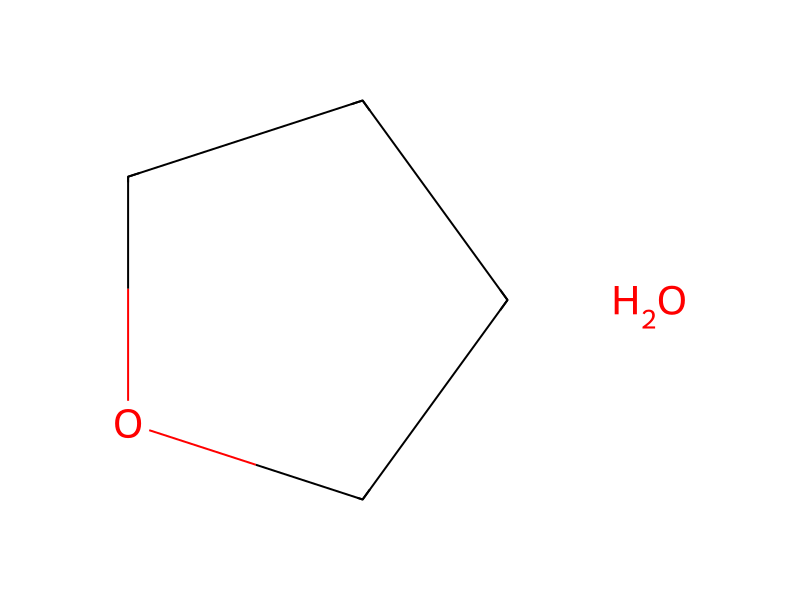
C[O:2][C:3]([C:5]1[CH:10]=[CH:9][C:8](=[O:11])[N:7]([C:12]2[CH:17]=[CH:16][CH:15]=[CH:14][CH:13]=2)[CH:6]=1)=[O:4].O.[OH-].[Li+]>O.O1CCCC1>[O:11]=[C:8]1[N:7]([C:12]2[CH:13]=[CH:14][CH:15]=[CH:16][CH:17]=2)[CH:6]=[C:5]([C:3]([OH:4])=[O:2])[CH:10]=[CH:9]1Participants



Procedure
6-Hydroxynicotinic acid (4) reacts with thionyl chloride and methanol to give methyl-6-oxo-1,6-dihydropyridine-3-carboxylate (5), which is coupled with phenylboronic acid in the presence of copper(II) acetate monohydrate, pyridine and molecular sieves in dichloromethane to give methyl-6-oxo-1-phenyl-1,6-dihydropyridine-3-carboxylate (6). Compound 6 is hydrolyzed with lithium hydroxide monohydrate in tetrahydrofuran water, to give 6-oxo-1-phenyl-1,6-dihydropyridine-3-carboxylic acid 7. Acid 7 reacts with isobutyl chloroformate in the presence of N-methylmorpholine in tetrahydrofuran to give a mixed anhydride which is reduced with sodium borodeuteride in tetrahydrofuran to give d2-5-(hydroxymethyl)-1-phenylpyridine-2(1H)-one (8). Compound 8 is converted to d2-5-bromomethyl-1-phenyl-1H-pyridin-2-one (9) by reacting with phosphorus tribromide in dichloromethane. Bromide 9 is reduced with lithium aluminum deuteride to give d3-5-(methyl)-1-phenylpyridine-2(1H)-one (10) of Formula (I).
Sources & evidence
- ORD record
- ord-b0ca37f1171046618e86bfe46b889ff2
- Source dataset
- uspto-grants-2015_04
- Patent number
- US09018232B2
Reaction notes
Loading…