Acetonitrile → 4,4,4-Trifluoro-3-oxobutanenitrile
Reaction equation

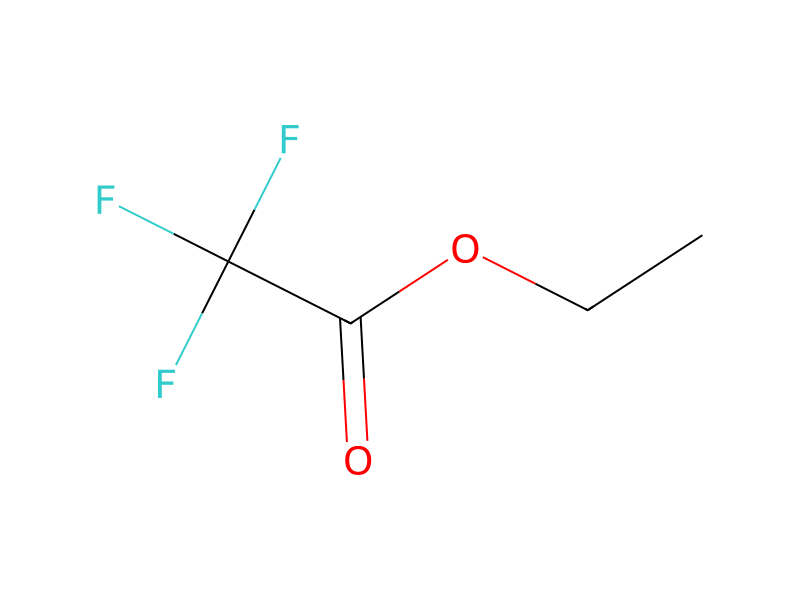
C([Li])CCC.[C:6](#[N:8])[CH3:7].[F:9][C:10]([F:17])([F:16])[C:11](OCC)=[O:12]>C1COCC1>[F:9][C:10]([F:17])([F:16])[C:11](=[O:12])[CH2:7][C:6]#[N:8]Participants
Reactant 3


Product 1

Reagents, catalysts & solvents 1

Conditions
- Temperature
- -78 °C
Procedure
A flame-dried flask was charged with 20 ml (32 mmol) n-butyllithium solution (1.6 M in hexanes) in dry THF (100 ml) under inert gas atmosphere and cooled to −78° C. Next, 1.47 ml (28 mmol) acetonitrile were slowly added, and the resulting mixture was stirred for 1 h at −74° C. Then, 2.28 ml (20 mmol) ethyl trifluoroacetate were slowly added over 5 min maintaining the temperature below −69° C. The reaction mixture was stirred for 2 h at −45° C. and then quenched by addition of hydrochloric acid (2 M, 9.6 ml) while keeping the temperature below −20° C. The resulting clear solution was allowed to warm to room temperature and then concentrated under reduced pressure. The residual aqueous slurry was extracted several times with diethylether (100 ml portions), and the combined organic layers were dried over sodium sulfate and concentrated under reduced pressure to yield 4.25 g (84% of th.) of the crude title compound (54% purity) which was used in the next step without further purification.
Workup
- temperaturemaintaining the temperature below −69° C
- stirringThe reaction mixture was stirred for 2 h at −45° C.
- customquenched by addition of hydrochloric acid (2 M, 9.6 ml)
- customthe temperature below −20° C
- temperatureto warm to room temperature
- concentrationconcentrated under reduced pressure
- extractionThe residual aqueous slurry was extracted several times with diethylether (100 ml portions)
- dry with materialthe combined organic layers were dried over sodium sulfate
- concentrationconcentrated under reduced pressure
Sources & evidence
- ORD record
- ord-34c6cf2254714e06bd73154a5cd3c9b4
- Source dataset
- uspto-grants-2015_04
- Patent number
- US09018234B2
Reaction notes
Loading…