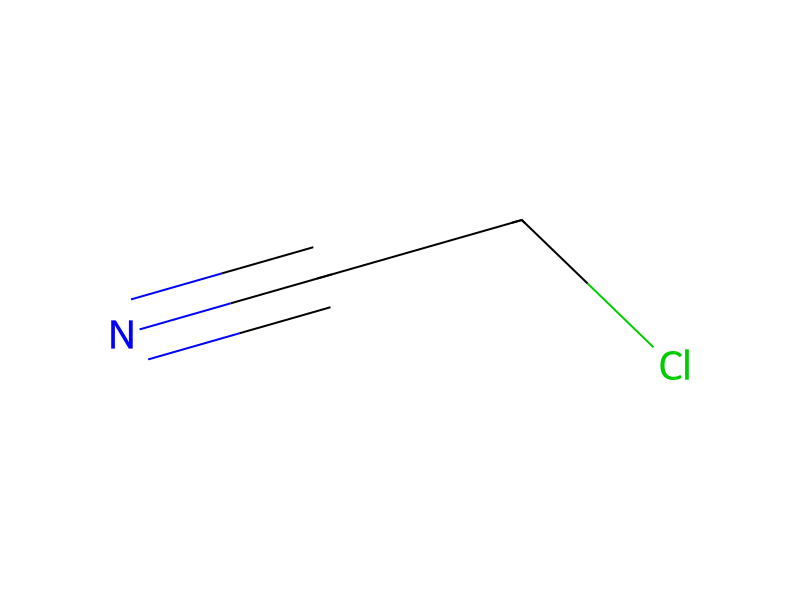
Chloroacetonitrile → HCID 86673651, compound
Reaction equation

[O:1]=[C:2]1[NH:7][C:6]2[CH:8]=[C:9]([C:11]3[CH:16]=[CH:15][CH:14]=[CH:13][CH:12]=3)[S:10][C:5]=2[C:4](=[O:17])[N:3]1[CH:18]1[CH2:23][CH2:22][N:21]([C:24]([O:26][C:27]([CH3:30])([CH3:29])[CH3:28])=[O:25])[CH2:20][CH2:19]1.Cl[CH2:32][C:33]#[N:34].C(=O)([O-])[O-].[K+].[K+].C(=O)([O-])[O-].[Na+].[Na+].C(N(C(C)C)CC)(C)C>C(N(CC)CC)C.CS(C)=O.CN(C)C=O.C(#N)C.O1CCCC1.C(Cl)(Cl)Cl>[C:33]([CH2:32][N:7]1[C:6]2[CH:8]=[C:9]([C:11]3[CH:16]=[CH:15][CH:14]=[CH:13][CH:12]=3)[S:10][C:5]=2[C:4](=[O:17])[N:3]([CH:18]2[CH2:23][CH2:22][N:21]([C:24]([O:26][C:27]([CH3:30])([CH3:29])[CH3:28])=[O:25])[CH2:20][CH2:19]2)[C:2]1=[O:1])#[N:34]Participants
Reactant 5




Product 1

Reagents, catalysts & solvents 6






Procedure
An alternative method for the preparation of the N-tert-butyloxycarbonyl protected compounds of formula 4, wherein R3 is a tetrazol-5-yl ring substituted by R4, R4 has the above-mentioned meanings and R5 is unsubstituted phenyl is shown in reaction scheme 2. According to reaction scheme 2 the heterocyclic group R3 is not introduced via reaction with a compound of formula 5 as shown in reaction scheme 1, but is build up in a multi-step procedure. In a first step tert-butyl 4-(2,4-dioxo-6-phenyl-1,4-dihydrothieno[3,2-d]pyrimidin-3(2H)-yl)piperidine-1-carboxylate (Experimental part—Example B50) is reacted with chloroacetonitrile in an appropriate solvent such as chloroform, tetrahydrofuran, acetonitrile, N,N-dimethylformamide or dimethyl sulfoxide in the presence of a base such as potassium carbonate, sodium carbonate, diisopropylethylamine or triethylamine preferably at elevated temperature preferably at 100° C. to yield tert-butyl 4-[1-(cyanomethyl)-2,4-dioxo-6-phenyl-1,4-dihydrothieno[3,2-d]pyrimidin-3(2H)-yl]piperidine-1-carboxylate (Experimental part—Example B14a). Transformation of the cyano group of tert-butyl 4-[1-(cyanomethyl)-2,4-dioxo-6-phenyl-1,4-dihydrothieno[3,2-d]pyrimidin-3(2H)-yl]piperidine-1-carboxylate to the corresponding tetrazole moiety (tert-butyl 4-[2,4-dioxo-6-phenyl-1-(1H-tetrazol-5-ylmethyl)-1,4-dihydrothieno[3,2-d]pyrimidin-3(2H)-yl]piperidine-1-carboxylate and tert-butyl 4-[2,4-dioxo-6-phenyl-1-(2H-tetrazol-5-ylmethyl)-1,4-dihydrothieno[3,2-d]pyrimidin-3(2H)-yl]piperidine-1-carboxylate; Experimental Part—Example 14b) can be accomplished by conversion with sodium azide in the presence of triethyl ammonium chloride in a suitable solvent such as for example N,N-dimethylformamide at elevated temperature preferably at 100° C. In a subsequent reaction step the tautomeric compounds tert-butyl 4-[2,4-dioxo-6-phenyl-1-(1H-tetrazol-5-ylmethyl)-1,4-dihydrothieno[3,2-d]pyrimidin-3(2H)-yl]piperidine-1-carboxylate and tert-butyl 4-[2,4-dioxo-6-phenyl-1-(2H-tetrazol-5-ylmethyl)-1,4-dihydrothieno[3,2-d]pyrimidin-3(2H)-yl]piperidine-1-carboxylate are alkylated with a compound of formula 6, wherein R4 has the above-mentioned meanings and LG stands for a suitable leaving group, such as for example a halide, preferably chlorine or bromine, or a mesyl or tosyl group in the presence of a base such as for example lithium hydride, sodium hydride or potassium carbonate, sodium carbonate, diisopropylethylamine, triethylamine in an appropriate solvent such as for example N,N-dimethylformamide or dimethyl sulfoxide at elevated temperature, preferably at 40° C. to yield tert-butyl 4-{1-[(2-(R4)-2H-tetrazol-5-yl)methyl]-2,4-dioxo-6-phenyl-1,4-dihydrothieno[3,2-d]pyrimidin-3(2H)-yl}piperidine-1-carboxylate and 4-{1-[(1-(R4)-1H-tetrazol-5-yl)methyl]-2,4-dioxo-6-phenyl-1,4-dihydrothieno[3,2-d]pyrimidin-3(2H)-yl}piperidine-1-carboxylate.
Workup
- customas shown in reaction scheme 1
Sources & evidence
- ORD record
- ord-d5d243999e114826b7f35a1bc330f45e
- Source dataset
- uspto-grants-2015_04
- Patent number
- US09018175B2
Reaction notes
Loading…