Propane sultone → 3-(5-Chloro-2,3,3-trimethyl-3H-pyrrolo[2,3-b]pyridin-7-ium-7-yl)propane-1-sulfonate
Reaction equation

[Cl:1][C:2]1[CH:3]=[C:4]2[C:10]([CH3:12])([CH3:11])[C:9]([CH3:13])=[N:8][C:5]2=[N:6][CH:7]=1.[CH2:14]1[CH2:20][S:17](=[O:19])(=[O:18])[O:16][CH2:15]1>C(OCC)(=O)C>[Cl:1][C:2]1[CH:3]=[C:4]2[C:10]([CH3:12])([CH3:11])[C:9]([CH3:13])=[N:8][C:5]2=[N+:6]([CH2:15][CH2:14][CH2:20][S:17]([O-:19])(=[O:18])=[O:16])[CH:7]=1Participants
4
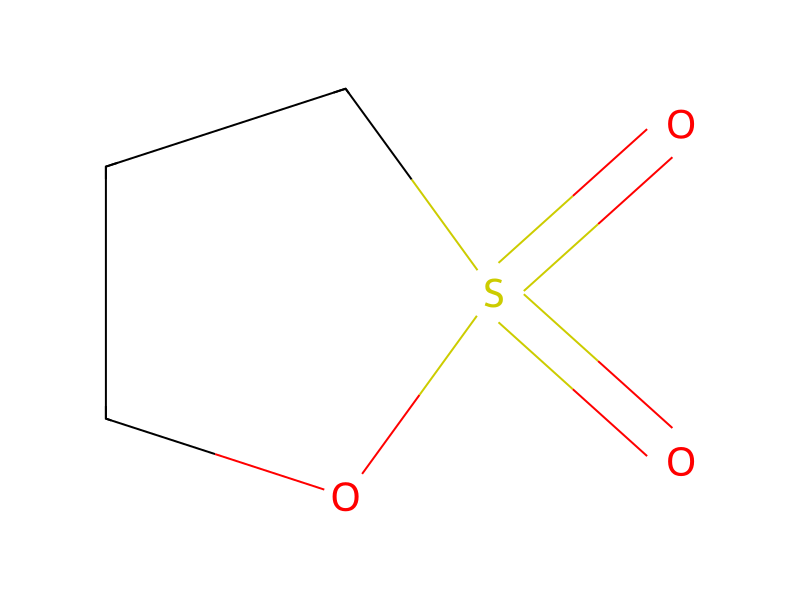



Conditions
- Temperature
- 65 °C
Procedure
A mixture of 1 g of 5-chloro-2,3,3-trimethyl-3H-pyrrolo[2,3-b]pyridine and 1.60 g of 1,3-propanesultone was heated at 65° C. for 2 h. Ethyl acetate (ca. 100 mL) was added and the resulting mixture was stirred at room temperature overnight to yield 2.50 g of the product.
Sources & evidence
- ORD record
- ord-4f086f18b5f8489f86e3acc4b6daffd7
- Source dataset
- uspto-grants-2016_08
- Patent number
- US09408924B2
Reaction notes
Loading…