L-Glutamine → L-Aspartic Acid
Reaction equation

[NH2:1][C@H:2]([C:8]([OH:10])=[O:9])[CH2:3][CH2:4][C:5](=[O:7])N.[NH2:11][C@H:12]([C:17]([OH:19])=[O:18])[CH2:13][C:14](=[O:16])N>P([O-])([O-])([O-])=O.[K+].[K+].[K+]>[NH2:1][C@H:2]([C:8]([OH:10])=[O:9])[CH2:3][CH2:4][C:5]([OH:16])=[O:7].[NH2:11][C@H:12]([C:17]([OH:19])=[O:18])[CH2:13][C:14]([OH:7])=[O:16]Participants
5
Reactant 2
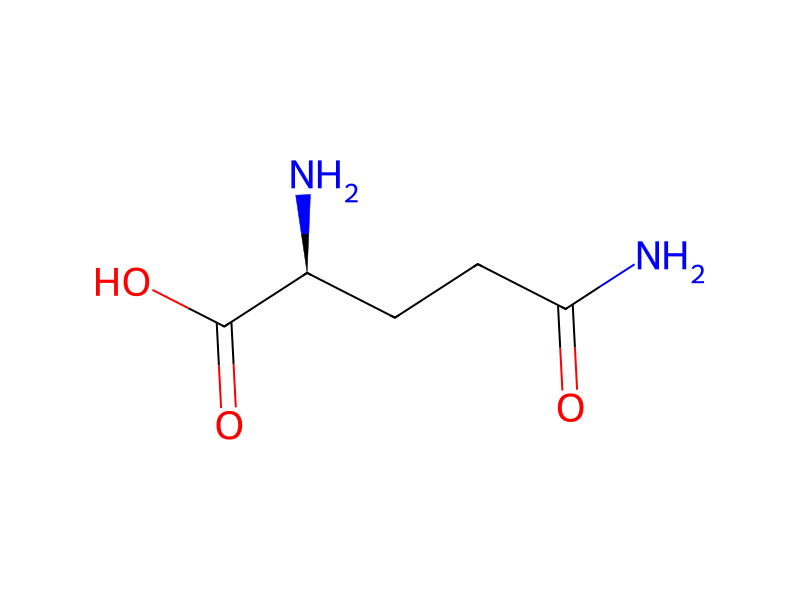

Product 2


Reagents, catalysts & solvents 1

Conditions
- Temperature
- 95 °C
Procedure
10 mM L-glutamine or 10 mM L-asparagine in 0.1 M potassium phosphate pH 7.0, respectively, were preheated to 37° C. The resulting assay was started by addition of 50 μl native or 10 μl recombinant enzyme in a total reaction volume of 150 μL and stopped after 10-20 min by addition of 20 μL 3% TCA or by heating at 95° C. for 10 min. A control experiment was carried out without amino acids. Formation of product was followed using HPLC. One unit of enzyme activity was calculated as the amount of enzyme required to produce 1 μM glutamic acid or aspartic acid respectively, at 37° C. per minute.
Workup
- customwere preheated to 37° C
- additionThe resulting assay was started by addition of 50 μl native
Sources & evidence
- ORD record
- ord-db67b633454d49d39710a9d1a1110501
- Source dataset
- uspto-grants-2016_08
- Patent number
- US09410138B2
Reaction notes
Loading…