1-Octanol → HCID 14272528, compound
Reaction equation

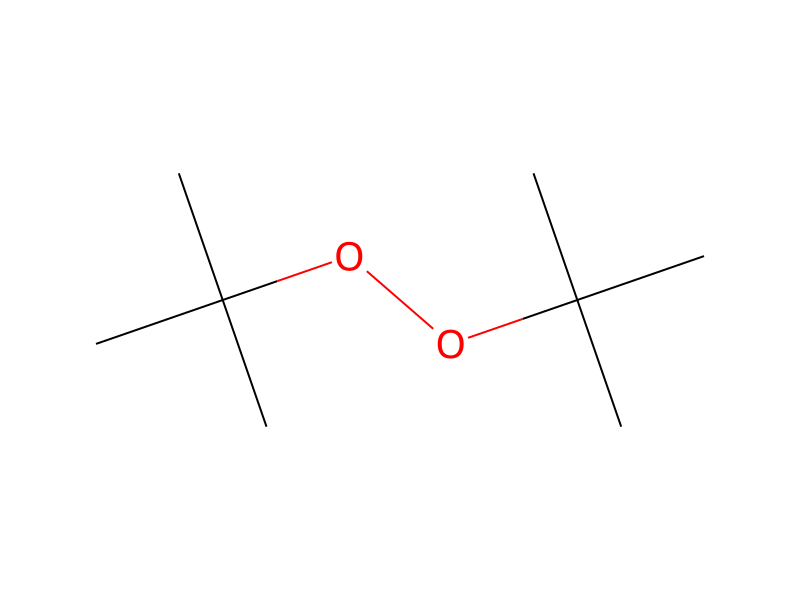
[CH2:1]([OH:9])[CH2:2][CH2:3][CH2:4][CH2:5][CH2:6][CH2:7][CH3:8].[CH2:10]([C:12]1[CH:17]=[CH:16][CH:15]=[CH:14][CH:13]=1)[CH3:11].C(OOC(C)(C)C)(C)(C)C>>[C:12]1([CH:10]([CH3:11])[O:9][CH2:1][CH2:2][CH2:3][CH2:4][CH2:5][CH2:6][CH2:7][CH3:8])[CH:17]=[CH:16][CH:15]=[CH:14][CH:13]=1Participants
4



Conditions
- Temperature
- 90 °C
Procedure
Into a pressure vessel 1-octanol (160 μL, 1 mmol, 1 eq) was added and diluted with ethylbenzene (1.225 mL, 10 mmol, 10 eq). To this stirring solution was added 1 mol % of a stock solution of {[Cl2NN]Cu}2(benzene) from the catalyst stock solution described in Example 4 (200 μL=0.01 mmol). After adding of tert-butyl peroxide (220 μL, 1.2 mmol), the pressure vessel was sealed and heated to 90° C. for 24 hr. The catalyst was separated by exposing the mixture to air and filtering through Celite®. After removing ethylbenzene under vacuum, the residue was analyzed by 1H NMR and GC/MS to determine the yield and consumption of starting materials. 1H NMR Yield: 52%.
Workup
- customthe pressure vessel was sealed
- customThe catalyst was separated
- filtrationfiltering through Celite®
- customAfter removing ethylbenzene under vacuum
- customyield
- customconsumption of starting materials
Sources & evidence
- ORD record
- ord-bdb1322d62cb4e9ba3b23ffaaad8dbf6
- Source dataset
- uspto-grants-2016_08
- Patent number
- US09416080B2
Reaction notes
Loading…