Sodium Hydroxide → 1-(4-(5-isopropyl-1H-pyrazol-3-ylamino)-6,7-dihydro-5H-cyclopenta[d]pyrimidin-2-yl)pyrrolidine-2-carboxylic acid
Reaction equation

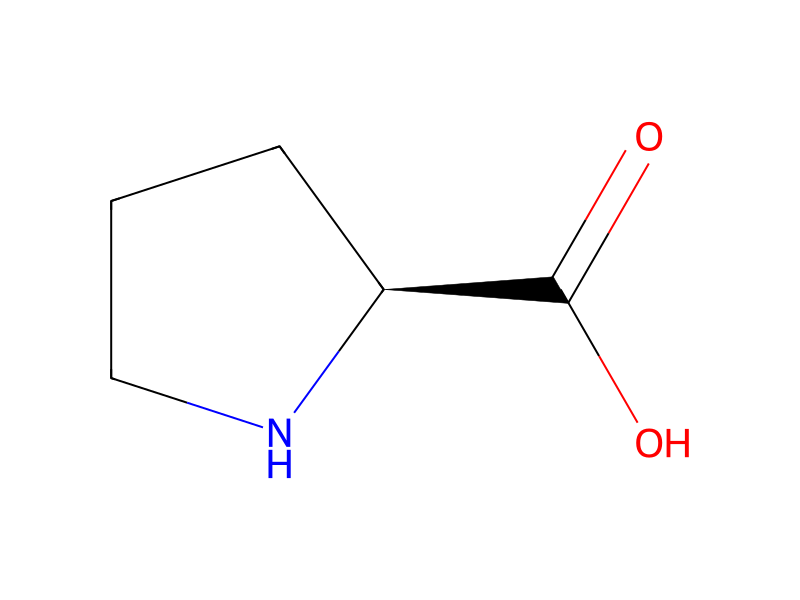
Cl[C:2]1[N:3]=[C:4]([NH:11][C:12]2[CH:16]=[C:15]([CH:17]([CH3:19])[CH3:18])[NH:14][N:13]=2)[C:5]2[CH2:10][CH2:9][CH2:8][C:6]=2[N:7]=1.[NH:20]1[CH2:27][CH2:26][CH2:25][C@H:21]1[C:22]([OH:24])=[O:23].[OH-].[Na+].C(N(CC)C(C)C)(C)C>O1CCOCC1>[CH:17]([C:15]1[NH:14][N:13]=[C:12]([NH:11][C:4]2[C:5]3[CH2:10][CH2:9][CH2:8][C:6]=3[N:7]=[C:2]([N:20]3[CH2:27][CH2:26][CH2:25][CH:21]3[C:22]([OH:24])=[O:23])[N:3]=2)[CH:16]=1)([CH3:19])[CH3:18]Participants
6
Reactant 4



Product 1

Reagents, catalysts & solvents 1

Conditions
- Temperature
- 100 °C
Procedure
To a suspension of 2-chloro-N-(5-isopropyl-1H-pyrazol-3-yl)-6,7-dihydro-5H-cyclopenta[d]pyrimidin-4-amine, Compound (iii) (5 g, 18 mmol) in dioxane (60 mL) was added L-proline (3.11 g, 27 mmol) followed by 5N NaOH (5.4 mL, 27 mmol) and N,N-diisopropylethyl amine (2.32 g, 18 mmol). The reaction mixture was allowed to stir at 100° C. for 16 h. The solvent was removed under reduced pressure and the residue was acidified with 1 N HCl solution to pH 4. The product was suspended in water (10 mL), filtered, washed with ether and dried to afford 1-(4-(5-isopropyl-1H-pyrazol-3-ylamino)-6,7-dihydro-5H-cyclopenta[d]pyrimidin-2-yl)pyrrolidine-2-carboxylic acid (5 g, 78% yield).
Workup
- customThe solvent was removed under reduced pressure
- filtrationfiltered
- washwashed with ether
- customdried
Sources & evidence
- ORD record
- ord-a3f7c0ab491a408f8719a50123c62619
- Source dataset
- uspto-grants-2016_08
- Patent number
- US09422267B2
Reaction notes
Loading…