Pyridine → HCID 22905634, compound
Reaction equation

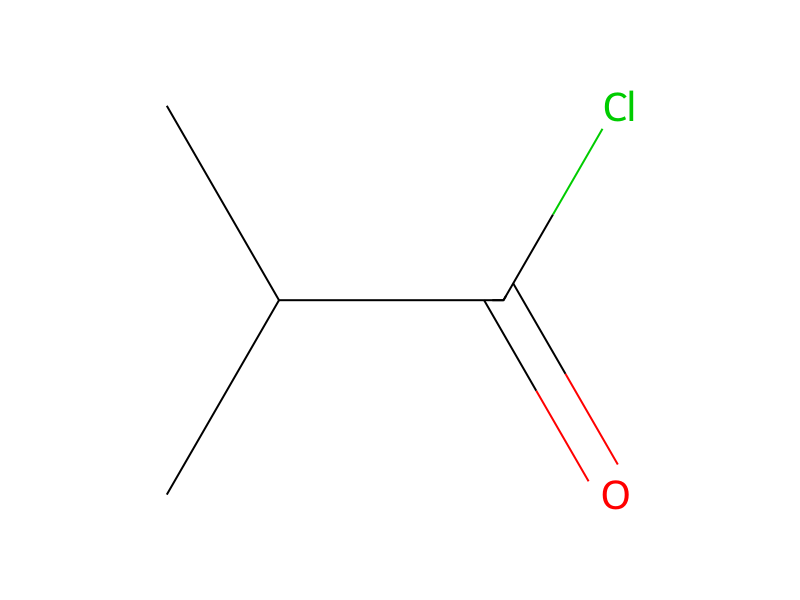
[OH:1][C:2]1[C:3]([CH3:13])=[C:4]2[C:8](=[CH:9][C:10]=1[CH3:11])[NH:7][CH2:6][CH:5]2[CH3:12].N1C=CC=CC=1.[C:20](Cl)(=[O:24])[CH:21]([CH3:23])[CH3:22]>C(Cl)Cl>[C:20]([N:7]1[C:8]2[C:4](=[C:3]([CH3:13])[C:2]([OH:1])=[C:10]([CH3:11])[CH:9]=2)[CH:5]([CH3:12])[CH2:6]1)(=[O:24])[CH:21]([CH3:23])[CH3:22]Participants
Reactant 3


Product 1

Reagents, catalysts & solvents 1

Procedure
To an ice-cold solution of indoline 10 (160 mg, 0.9 mmol) dissolved in methylene chloride (4 mL) and kept under an argon atmosphere were added sequentially pyridine (1 mL) and isobutyryl chloride (0.I mL, 9 mmol); the mixture was stirred over the range of 0° C. to room temperature for some 17 h. The mixture was diluted with methylene chloride, washed with brine and dried (MgSO4). Removal of solvents followed by purification of the residue using 1:9 ethyl acetate:hexanes as eluent afforded the desired N-isobutyryl-5-hydroxy-3,4,6-trimethylindoline (11b, 163 mg, 73% yield) as a colorless solid, mp 123°-125° C. Spectral data: 1H NMR: δ1.1-1.25 (m, 9H), 2.17 (s, 3H), 2.20 (s, 3H), 2.72 (quintet, 1H, J=6.5 Hz), 3.35 (t, 1H, J=6.5 Hz), 3.78 (dd, 1H, J=10.1, 1.0 Hz), 4.13 (t, 1H, J=9.1 Hz), 7.95 (s, 1H); 13C NMR: δ 11.9, 16.5, 18.8, 19.3, 20.7, 33.1, 34.0, 56.3, 116.8, 119.5, 122.1, 134.1, 135.0, 148.8, 175.0; HRMS: calcd. for C15H21NO2 247.1523, fnd. 247.1573. Anal: calcd. for C15H21NO2C, 72.85, H, 8.55, N, 5.66, fnd. C, 72.63, H, 8.59, N, 5.60.
Workup
- washwashed with brine
- dry with materialdried (MgSO4)
- customRemoval of solvents
- customfollowed by purification of the residue
Sources & evidence
- ORD record
- ord-fc3887e276024ae9bd645069b917c0d0
- Source dataset
- uspto-grants-1997_10
- Patent number
- US05674876
Reaction notes
Loading…