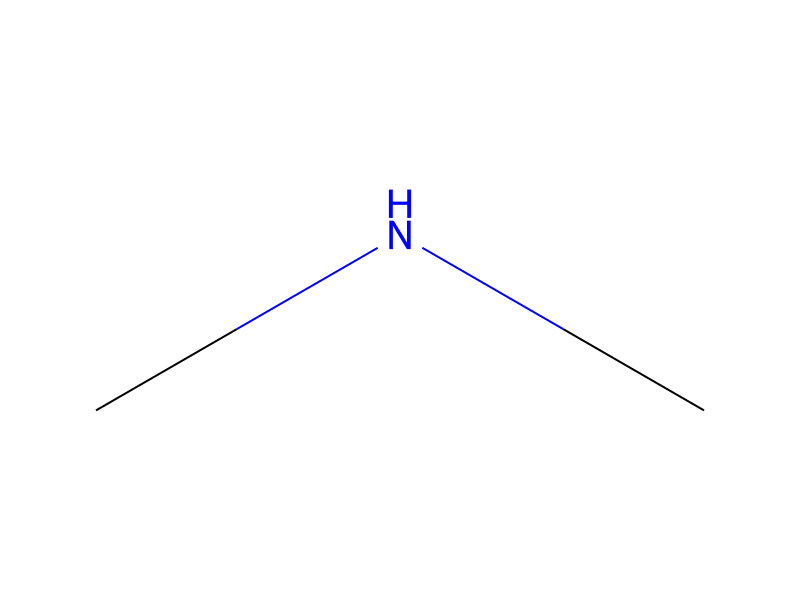
Dimethylamine → 1,1-Dimethyl-2-(2-morpholinophenyl)guanidine
Reaction equation

CS[C:3](=[NH:17])[NH:4][C:5]1[CH:10]=[CH:9][CH:8]=[CH:7][C:6]=1[N:11]1[CH2:16][CH2:15][O:14][CH2:13][CH2:12]1.[CH3:18][NH:19][CH3:20]>C(N(CC)CC)C>[CH3:18][N:19]([CH3:20])[C:3]([NH2:17])=[N:4][C:5]1[CH:10]=[CH:9][CH:8]=[CH:7][C:6]=1[N:11]1[CH2:16][CH2:15][O:14][CH2:13][CH2:12]1Participants
4
Reactant 2

Product 1

Reagents, catalysts & solvents 1

Procedure
A mixture of 2-methyl-1-(2-morpholinophenyl)-2-thiopseudourea hydroidide (3.8 g), a 33% ethanolic solution of dimethylamine (5 ml) and triethylamine (25 ml) was heated at 80° C. for 8 hours. Triethylamine was removed by evaporation under reduced pressure and the residue treated with a mixture of ice and water to give 1,1-dimethyl-2-(2-morpholinophenyl)guanidine (m.p. 141°-143° C.) which was recrystallised from hexane.
Workup
- customTriethylamine was removed by evaporation under reduced pressure
- additionthe residue treated with a mixture of ice and water
Sources & evidence
- ORD record
- ord-564e910fd6d94e02b14e69de64fc724d
- Source dataset
- uspto-grants-1994_12
- Patent number
- US05373008
Reaction notes
Loading…