Sodium Chloride → HCID 18950663, compound
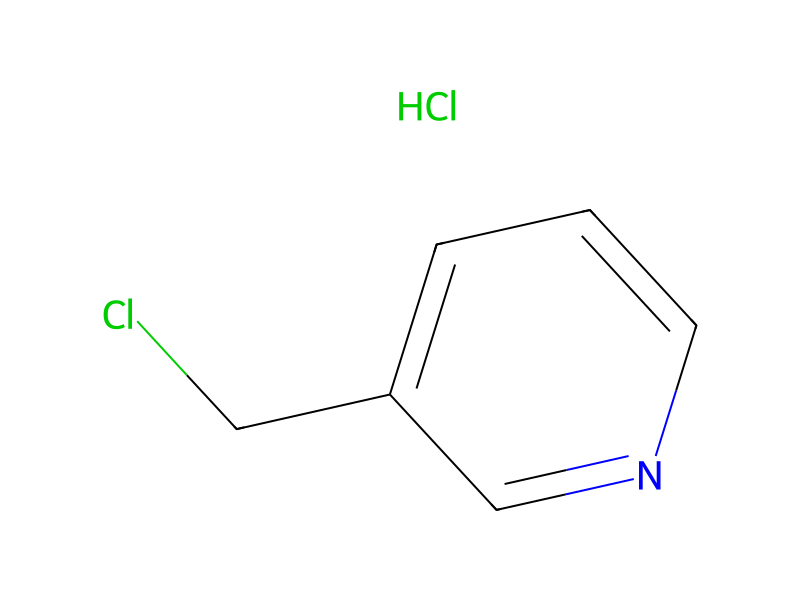
Reaction equation

[CH3:1][O:2][CH2:3][O:4][C:5]1[CH:13]=[CH:12][C:8]([CH2:9][C:10]#[N:11])=[CH:7][CH:6]=1.Cl.[N:15]1[CH:20]=[CH:19][CH:18]=[C:17]([CH2:21]Cl)[CH:16]=1.[Cl-].[Na+]>O1CCCC1>[CH3:1][O:2][CH2:3][O:4][C:5]1[CH:13]=[CH:12][C:8]([CH:9]([CH2:21][C:17]2[CH:16]=[N:15][CH:20]=[CH:19][CH:18]=2)[C:10]#[N:11])=[CH:7][CH:6]=1Participants
Reactant 3


Product 1

Reagents, catalysts & solvents 1

Procedure
The solution of 2.3 g of diisopropylamine in 30 ml of dry tetrahydrofuran was cooled to -35 to -40° C., followed by addition of 1.5M n-butyl lithium in 15 ml hexane in solution, and stirred for 30 minutes, to produce lithium diisopropylamide. To the solution was added the solution of 2.0 g of 4-methoxymethyloxybenzyl cyanide in 15 ml of dry tetrahydrofuran at -78° C., and stirred at the same temperature for 30 minutes, followed by addition of 3-picolyl chloride hydrochloride (1.9 g) at -78° C., and stirred overnight to room temperature. The reaction solution was poured into saturated aqueous sodium chloride solution, which was then extracted with ethyl acetate. The ethyl acetate phase was dried over magnesium sulfate, followed by the distillation of the solvent to obtain residue. The residue was subjected to chromatography on a silica gel column, which was then eluted with chloroform-methanol (50:1 v/v) to produce 0.67 g of 2-(4-methoxymethyloxyphenyl)-3-(3-pyridyl)propionitrile.
Workup
- stirringstirred overnight to room temperature
- extractionwas then extracted with ethyl acetate
- dry with materialThe ethyl acetate phase was dried over magnesium sulfate
- distillationfollowed by the distillation of the solvent
- customto obtain residue
- washwas then eluted with chloroform-methanol (50:1 v/v)
Sources & evidence
- ORD record
- ord-78e6c2a004cb4dcfb2f742fead6610d0
- Source dataset
- uspto-grants-1994_12
- Patent number
- US05374641
Reaction notes
Loading…