Ammonium Hydroxide → HCID 14654986, compound
Reaction equation

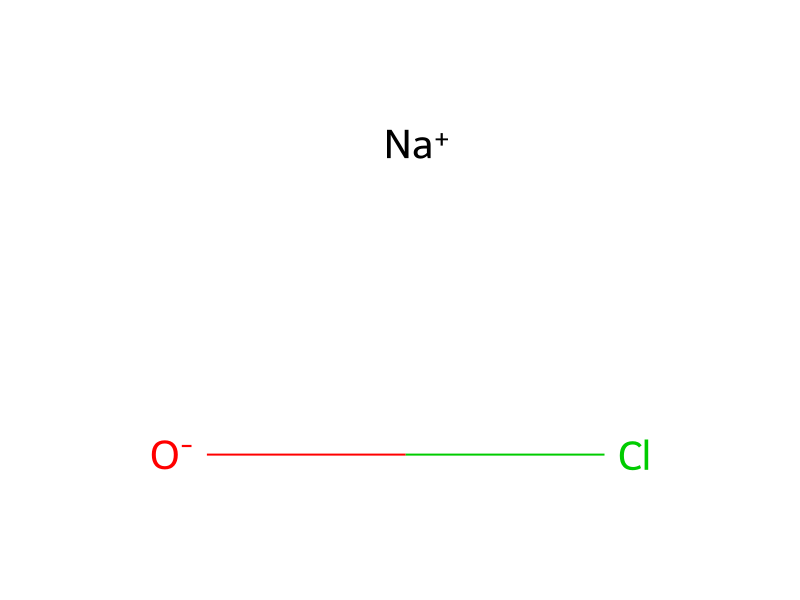
Cl[O-].[Na+].[OH-].[NH4+:5].[NH2:6][C:7]1[NH:12][C:11](=[S:13])[C:10]2[N:14]=[CH:15][N:16]([C@@H:17]3[O:23][C@H:22]([CH2:24][OH:25])[C@@H:20]([OH:21])[C@H:18]3[OH:19])[C:9]=2[CH:8]=1>[OH-].[K+]>[NH2:6][C:7]1[N:12]=[C:11]([S:13][NH2:5])[C:10]2[N:14]=[CH:15][N:16]([C@@H:17]3[O:23][C@H:22]([CH2:24][OH:25])[C@@H:20]([OH:21])[C@H:18]3[OH:19])[C:9]=2[CH:8]=1Participants
Reactant 3


Product 1

Reagents, catalysts & solvents 1

Conditions
- Temperature
- 0 °C
Procedure
Aqueous sodium hypochlorite (5.25%, 4.6 mL, 3.2 mmol) was cooled to 0° C. Twelve mL of 1.4N ammonium hydroxide was added and stirred for 10 min at 0° C. A suspension of 6-amino-1-β-D-ribofuranosylimidazo [4,5-c]pyridine-4(5H)-thione 34, prepared as per P. D. Cook and R. K. Robins, J. Oro. Chem., 43, 189 (1978), (900 mg, 3 mmol) in 2N potassium hydroxide (1.5 mL) was added and stirred for 1.5 h at 0° C. The precipitate was collected by filtration, washed with water, EtOH, and acetone and dried at room temperature over P2O5 to yield 660 mg of desired compound 35: m.p. 134°-137° C. (dec): UV: λmax (pH 1) 374 nm (ε7,000): 264 (5,400), 230 (21,400) λmax (pH 7) 322 nm (ε5,500), 261 (5,800) 223 (24,000): λmax (pH 11) 319 nm (ε8,500), 223 (24,100): 1H NMR (DMSO-d6): δ3.70 (s, 2, exchangeable in D20, SNH2), 5.61 (d, 1, J =6.4 Hz, C1'H), 5.63 (s, 2, exchangeable in D2O, NH2), 6.25 (s, 1, C7H), 8.12 (s, 1, C2H). Anal. Calcd for C11H15N5O4S.1/2H2O: C, 40.99: H, 5.00: N, 21.73: S, 9.95. Found: C, 41.12: H, 4.81: N, 21.43: S, 10.23.
Workup
- stirringstirred for 1.5 h at 0° C
- filtrationThe precipitate was collected by filtration
- washwashed with water, EtOH, and acetone
- dry with materialdried at room temperature over P2O5
Sources & evidence
- ORD record
- ord-4c6a79e0d8a8463db22043b1486cd496
- Source dataset
- uspto-grants-1991_06
- Patent number
- US05026836
Reaction notes
Loading…