Phosphorus oxybromide → Ethyl 4-bromoquinoline-2-carboxylate
Reaction equation

O[C:2]1[C:11]2[C:6](=[CH:7][CH:8]=[CH:9][CH:10]=2)[N:5]=[C:4]([C:12]([O:14][CH2:15][CH3:16])=[O:13])[CH:3]=1.P(Br)(Br)([Br:19])=O>C1(C)C=CC=CC=1.C(#N)C>[Br:19][C:2]1[C:11]2[C:6](=[CH:7][CH:8]=[CH:9][CH:10]=2)[N:5]=[C:4]([C:12]([O:14][CH2:15][CH3:16])=[O:13])[CH:3]=1Participants
5
Reactant 2
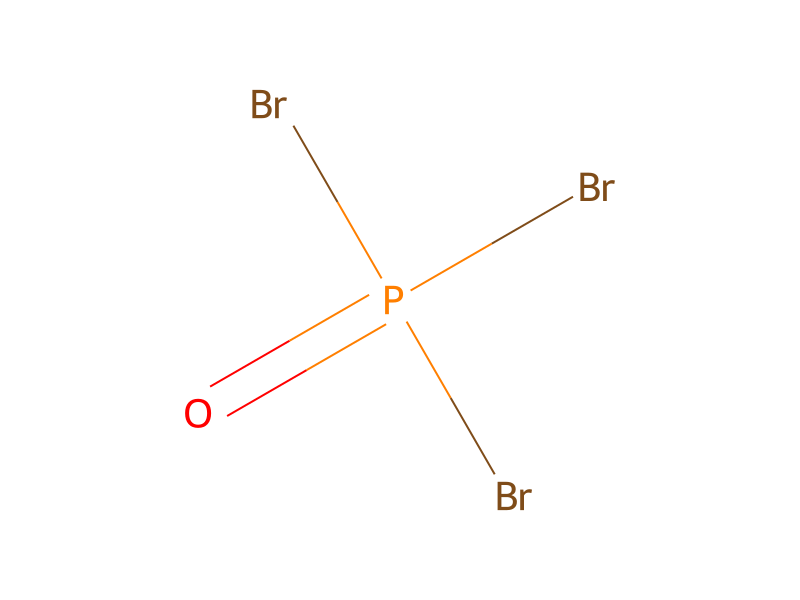

Product 1

Reagents, catalysts & solvents 2


Procedure
A solution of ethyl 4-hydroxyquinoline-2-carboxylate (10.0 g, 46.0 mmol) and phosphorus oxybromide (13.2 g, 46.0 mmol) in 100 mL of toluene and 10.0 mL acetonitrile was heated at 75° C. for 1.5 h. The reaction mixture was cooled to room temperature, quenched slowly with water, and extracted with ethyl acetate. The organic fraction was washed with brine, dried over sodium sulfate, filtered, and concentrated. The resultant residue was subjected to silica gel chromatography eluting with 0-50% ethyl acetate in hexanes to afford ethyl 4-bromoquinoline-2-carboxylate that gave a mass ion (ES+) of 280.1 (79Br) for M+H+.
Workup
- customquenched slowly with water
- extractionextracted with ethyl acetate
- washThe organic fraction was washed with brine
- dry with materialdried over sodium sulfate
- filtrationfiltered
- concentrationconcentrated
- washeluting with 0-50% ethyl acetate in hexanes
Sources & evidence
- ORD record
- ord-bf5239f09d5849a1858649a99f48d82b
- Source dataset
- uspto-grants-2015_12
- Patent number
- US09199939B2
Reaction notes
Loading…