Sodium borohydride → HCID 89420610, compound
Reaction equation

[NH2:1][C:2]1[N:7]=[CH:6][N:5]=[C:4]2[N:8]([CH:12]([C:14]3[C:15]([O:32][CH2:33][CH3:34])=[C:16]([CH:22]([CH2:28][N+:29]([O-])=O)[CH2:23][C:24](OC)=[O:25])[C:17]([CH3:21])=[C:18]([Cl:20])[CH:19]=3)[CH3:13])[N:9]=[C:10]([CH3:11])[C:3]=12.[BH4-].[Na+]>CO.C(=O)(O)[O-].[Na+].ClCCl.O.O.O.O.O.O.[Ni](Cl)Cl>[NH2:1][C:2]1[N:7]=[CH:6][N:5]=[C:4]2[N:8]([CH:12]([C:14]3[C:15]([O:32][CH2:33][CH3:34])=[C:16]([CH:22]4[CH2:28][NH:29][C:24](=[O:25])[CH2:23]4)[C:17]([CH3:21])=[C:18]([Cl:20])[CH:19]=3)[CH3:13])[N:9]=[C:10]([CH3:11])[C:3]=12Participants



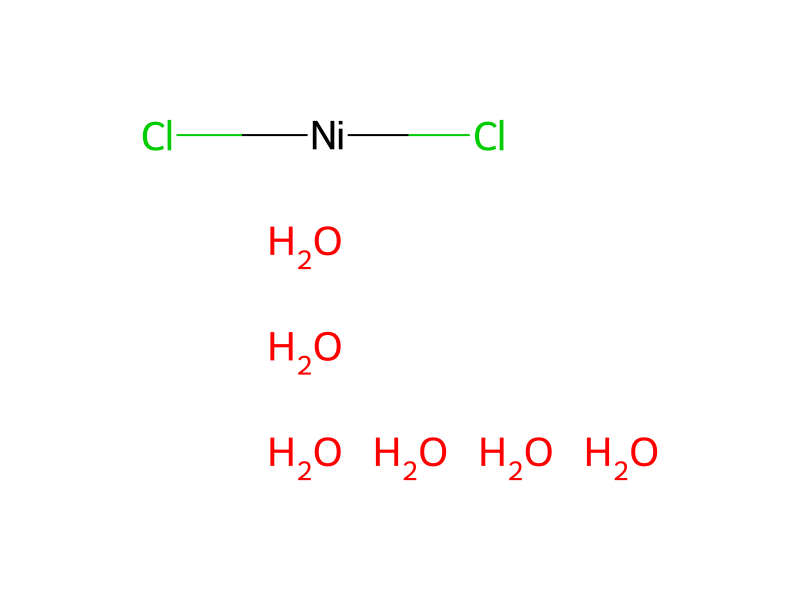



Conditions
- Temperature
- 0 °C
Procedure
A solution of methyl 3-{3-[1-(4-amino-3-methyl-1H-pyrazolo[3,4-d]pyrimidin-1-yl)ethyl]-5-chloro-2-ethoxy-6-methylphenyl}-4-nitrobutanoate (0.089 g, 0.18 mmol) in methanol (1.3 mL) was treated with nickel chloride hexahydrate (0.087 g, 0.36 mmol) was and stirred for 5 min. The reaction mixture was cooled to 0° C., treated with sodium tetrahydroborate (0.073 g, 1.9 mmol) in four portions, and stirred at room temperature for 30 min. The reaction mixture was heated at 60° C. for 1.5 h, cooled to room temperature, diluted with saturated sodium bicarbonate solution (10 mL) and dichloromethane (25 mL), and filtered through Celite. The Celite was washed with dichloromethane and the filtrate was transferred to a separatory funnel. The organic layer was separated, washed with brine, dried over sodium sulfate, filtered, and concentrated to residue. The crude residue was diluted with methanol and purified by preparative LCMS (XBridge C18 column, eluting with a gradient of acetonitrile/water containing 0.1% ammonium hydroxide, at flow rate of 60 mL/min) to give the desired peak 1 diastereoisomer (16 mg, 21%) and peak 2 diastereoisomer (19 mg, 24%). Peak 1 (compound 310): 1H NMR (300 MHz, DMSO-d6) δ 8.10 (s, 1H), 7.89 (s, 1H), 7.34 (s, 1H), 6.21 (q, J=7.1 Hz, 1H), 4.38-4.22 (m, 1H), 3.93-3.80 (m, 1H), 3.79-3.67 (m, 1H), 3.65-3.55 (m, 1H), 3.28-3.20 (m, 1H), 2.54 (s, 3H), 2.29 (dd, J=17.5, 8.3 Hz, 1H), 2.21 (s, 3H), 1.70 (d, J=7.0 Hz, 3H), 1.40 (t, J=6.9 Hz, 3H). LCMS for C21H26ClN6O2 (M+H)+: m/z=429.2; Found: 429.2. Peak 2 (compound 311): 1H NMR (300 MHz, DMSO-d6) δ 8.11 (s, 1H), 7.89 (s, 1H), 7.33 (s, 1H), 6.20 (q, J=7.1 Hz, 1H), 4.38-4.22 (m, 1H), 3.90-3.68 (m, 2H), 3.65-3.56 (m, 1H), 3.28-3.17 (m, 1H), 2.54 (s, 3H), 2.32 (dd, J=17.3, 8.5 Hz, 1H), 2.21 (s, 3H), 1.69 (d, J=7.0 Hz, 3H), 1.39 (t, J=6.9 Hz, 3H). LCMS for C21H26ClN6O2 (M+H)+: m/z=429.2; Found: 429.2.
Workup
- stirringstirred at room temperature for 30 min
- temperatureThe reaction mixture was heated at 60° C. for 1.5 h
- temperaturecooled to room temperature
- filtrationfiltered through Celite
- washThe Celite was washed with dichloromethane
- customthe filtrate was transferred to a separatory funnel
- customThe organic layer was separated
- washwashed with brine
- dry with materialdried over sodium sulfate
- filtrationfiltered
- concentrationconcentrated to residue
- additionThe crude residue was diluted with methanol
- custompurified by preparative LCMS (XBridge C18 column
- washeluting with a gradient of acetonitrile/water containing 0.1% ammonium hydroxide, at flow rate of 60 mL/min)
- customto give the desired peak 1 diastereoisomer (16 mg, 21%) and peak 2 diastereoisomer (19 mg, 24%)
Sources & evidence
- ORD record
- ord-ccf635acbbc84fe99ad317f4e89f8778
- Source dataset
- uspto-grants-2015_12
- Patent number
- US09199982B2
Reaction notes
Loading…