Potassium Carbonate → Imidacloprid
Reaction equation

[N+:1]([N:4]=[C:5]1[NH:9][CH2:8][CH2:7][NH:6]1)([O-:3])=[O:2].C(=O)([O-])[O-].[K+].[K+].[Cl:16][C:17]1[CH:22]=[CH:21][C:20]([CH2:23]Cl)=[CH:19][N:18]=1>C(#N)C>[CH:21]1[C:20]([CH2:23][N:6]2[CH2:7][CH2:8][NH:9]/[C:5]/2=[N:4]\[N+:1]([O-:3])=[O:2])=[CH:19][N:18]=[C:17]([Cl:16])[CH:22]=1Participants
Reactant 3

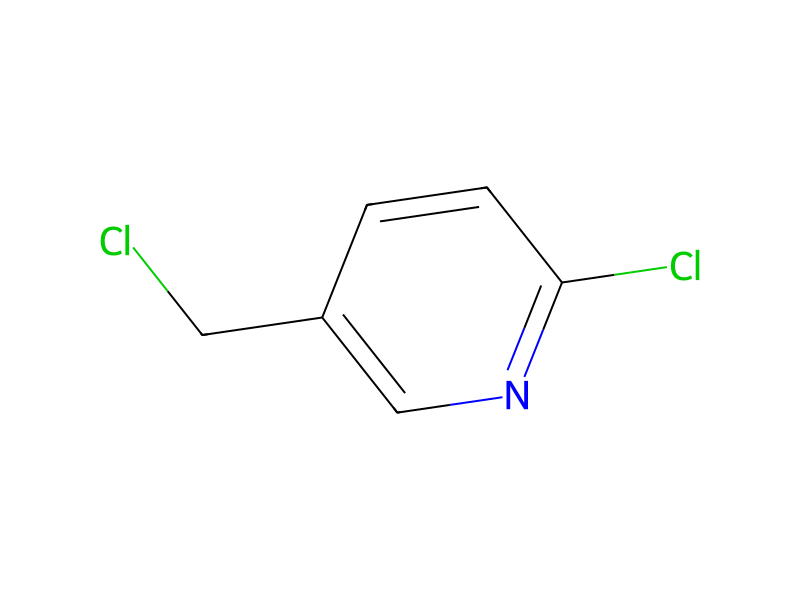

Product 1

Reagents, catalysts & solvents 1

Procedure
7.8 g (60 mmol) of 2-nitroiminoimidazolidine and 12.1 g (87.5 mmol) of potassium carbonate were dissolved in 60 ml of acetonitrile in a reflux flask. The mixture is heated to a temperature sufficient for achieving reflux operating condition. 8.1 g (50.0 mole) of 2-chloro-5-chloromethyl pyridine is dissolved in 40 ml of acetonitrile, and is dropwisely and continuously added into the flask under the reflux condition for a period of 0.5 hr, i.e. the addition rate is about 1.5 ml/minute (the addition rate at the onset of the reaction corresponds to 0.0278 equivalent of 2-chloro-5-chloromethyl pyridine per equivalent of 2-nitroiminoimidazolidine per minute) After completion of the reaction, the mixture is subjected to filtration. The filtrate is concentrated, and is further purified.
Workup
- temperatureThe mixture is heated to a temperature sufficient
- temperaturefor achieving reflux
- additioncontinuously added into the flask under the reflux condition for a period of 0.5 hr
- customAfter completion of the reaction
- filtrationthe mixture is subjected to filtration
- concentrationThe filtrate is concentrated
Sources & evidence
- ORD record
- ord-eee6d67c3a054d1c8417c5071cd8bdb9
- Source dataset
- uspto-grants-2015_12
- Patent number
- US09212162B1
Reaction notes
Loading…