Potassium Phosphate, Tribasic → 1-Bromo-4-chloro-2-cyclopropylbenzene
Reaction equation

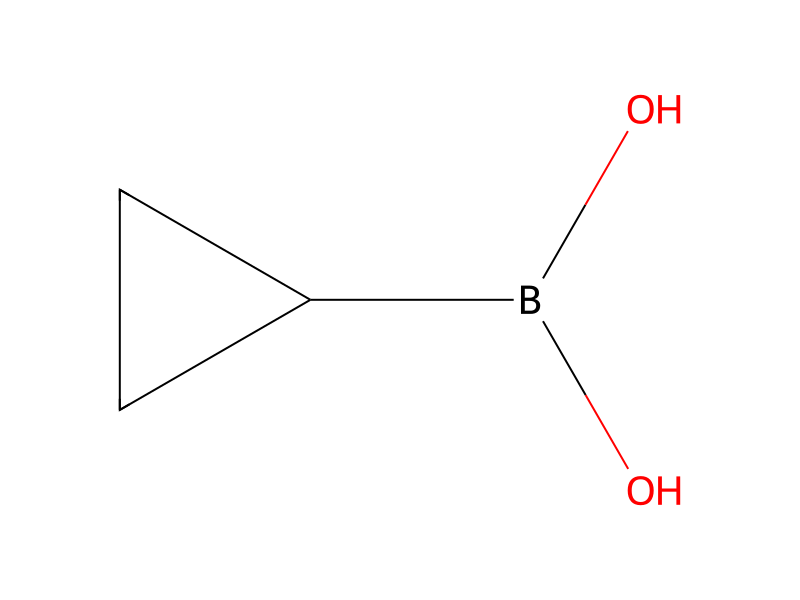
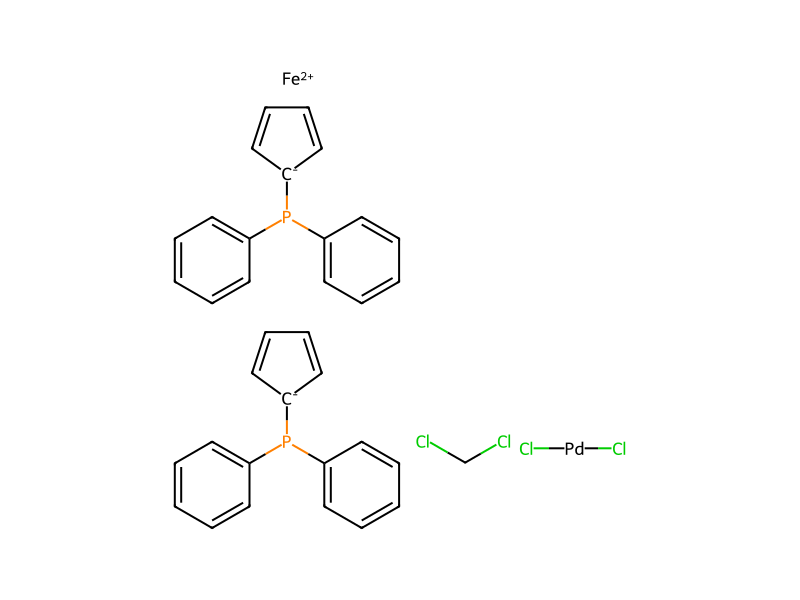
[CH:1]1(B(O)O)[CH2:3][CH2:2]1.[Br:7][C:8]1[CH:13]=[CH:12][C:11]([Cl:14])=[CH:10][C:9]=1I.P([O-])([O-])([O-])=O.[K+].[K+].[K+]>O1CCOCC1.O.C(Cl)Cl.C1C=CC(P(C2C=CC=CC=2)[C-]2C=CC=C2)=CC=1.C1C=CC(P(C2C=CC=CC=2)[C-]2C=CC=C2)=CC=1.Cl[Pd]Cl.[Fe+2].C(Cl)Cl>[Br:7][C:8]1[CH:13]=[CH:12][C:11]([Cl:14])=[CH:10][C:9]=1[CH:1]1[CH2:3][CH2:2]1Participants
8
Reactant 3


Product 1

Reagents, catalysts & solvents 4



Procedure
A solution of cyclopropylboronic acid (2.104 g, 24.49 mmol), 1-bromo-4-chloro-2-iodobenzene (5.700 g, 17.96 mmol), potassium phosphate (13.86 g, 65.3 mmol), and PdCl2(dppf)-DCM adduct (0.667 g, 0.816 mmol) in 18 mL dioxane and 6 mL water was heated to 100° C. overnight. The reaction mixture was then diluted with DCM and washed with water. The organics were dried over MgSO4 and concentrated. The crude residue was used in the next step without purification. m/z (ESI) does not ionize in H+ mode.
Workup
- washwashed with water
- dry with materialThe organics were dried over MgSO4
- concentrationconcentrated
- customThe crude residue was used in the next step without purification
Sources & evidence
- ORD record
- ord-a2a283699b80480bbf7d6db40a624a51
- Source dataset
- uspto-grants-2015_12
- Patent number
- US09212182B2
Reaction notes
Loading…