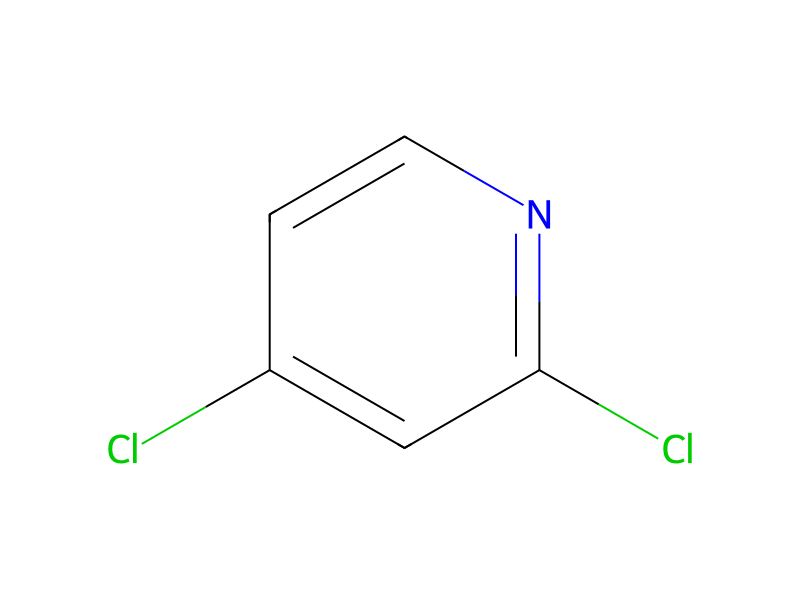
2,4-Dichloropyridine → 4-Chloro-2-(3-chlorophenyl)pyridine hydrochloride
Reaction equation

[Cl:1][C:2]1[CH:7]=[C:6]([Cl:8])[CH:5]=[CH:4][N:3]=1.[Cl:9][C:10]1[CH:11]=[C:12](B(O)O)[CH:13]=[CH:14][CH:15]=1>>[ClH:1].[Cl:8][C:6]1[CH:5]=[CH:4][N:3]=[C:2]([C:14]2[CH:13]=[CH:12][CH:11]=[C:10]([Cl:9])[CH:15]=2)[CH:7]=1Participants
3


Procedure
Following general procedure F, 2,4-dichloropyridine (4.0 g, 27 mmol) was reacted with (3-chlorophenyl)boronic acid (4.6 g, 30 mmol), followed by formation of the hydrochloride salt to afford the title compound (5.0 g, 71%) as a white solid. MW=260.55. 1H NMR (CDCl3, 500 MHz) δ 8.92-8.79 (m, 1H), 8.16-8.09 (m, 1H), 8.03 (s, 1H), 7.95 (s, 1H), 7.74-7.64 (m, 1H), 7.58-7.52 (m, 2H); APCI MS m/z 224 [M+H]+.
Sources & evidence
- ORD record
- ord-258c5a656afa42c295a05a7ebfb15a12
- Source dataset
- uspto-grants-2015_12
- Patent number
- US09221843B2
Reaction notes
Loading…