Pyridine → N-(3,4-dihydro-2H-naphthalen-1-ylidene)hydroxylamine
Reaction equation

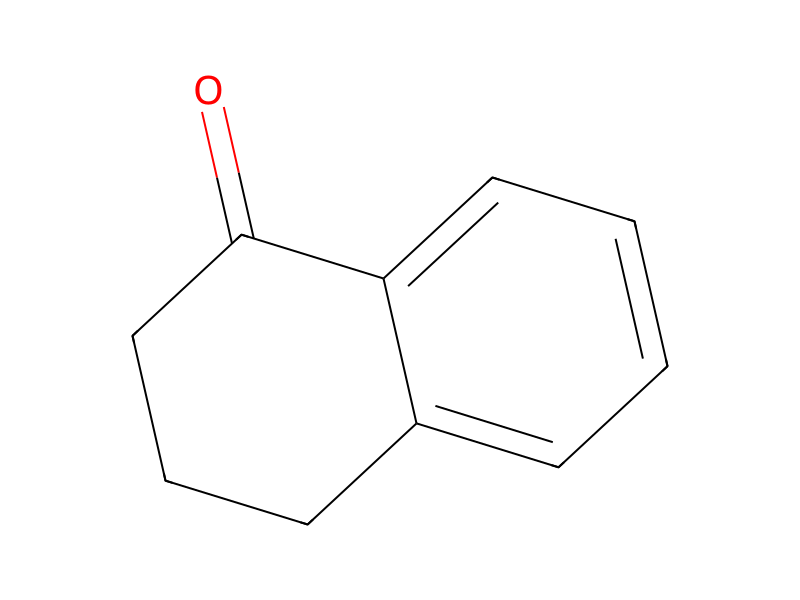
[CH2:1]1[CH2:11][C:9](=O)[C:8]2[C:3](=[CH:4][CH:5]=[CH:6][CH:7]=2)[CH2:2]1.Cl.[OH:13][NH2:14].N1C=CC=CC=1>CO.C(Cl)(Cl)Cl>[C:9]1(=[N:14][OH:13])[C:8]2[C:3](=[CH:4][CH:5]=[CH:6][CH:7]=2)[CH2:2][CH2:1][CH2:11]1Participants
Reactant 3


Product 1

Reagents, catalysts & solvents 2


Procedure
To a solution of α-tetralone (5.21 g) in methanol (25 ml), hydroxyamine hydrochloride (5.28 g) and pyridine (25 ml) were added and heated under reflux for 2 hours. The reaction mixture was concentrated and crystallized from ethanol to give a first crystal. After a second crystal was further obtained from the filtrate, this filtrate was concentrated, dissolved in chloroform, washed sequentially with 1M aqueous hydrochloric acid and brine, and then dried over anhydrous sodium sulfate. The crystals obtained earlier were combined and dissolved in chloroform, washed sequentially with 1M aqueous hydrochloric acid and brine, and then dried over anhydrous sodium sulfate. The chloroform solution obtained from the filtrate and the chloroform solution obtained from the crystals were combined and concentrated. The resulting residue was converted into a powder form by addition of n-hexane. The crystal was collected by filtration to give 3,4-dihydronaphthalen-1(2H)-one oxime (5.08 g) as a light-brown powder. To polyphosphoric acid (74.1 g), 3,4-dihydronaphthalen-1(2H)-one oxime thus obtained (5.08 g) was added and stirred at 120° C. for 1 hour. After the reaction mixture was cooled to room temperature, ice-cold water was added under ice cooling and stirred. The precipitated crystal was collected by filtration, and the resulting crystal was dissolved in chloroform and dried over anhydrous sodium sulfate. After the desiccant was filtered off, the solvent was distilled off under reduced pressure to give 1,3,4,5-tetrahydro-2H-1-benzoazepin-2-one (4.47 g) as a brown powder. 1,3,4,5-Tetrahydro-2H-1-benzoazepin-2-one thus obtained (4.47 g) was dissolved in tetrahydrofuran (100 ml), to which lithium aluminum hydride (2.12 g) was then added and heated under reflux for 4 hours. The reaction mixture was cooled to room temperature, diluted with 28% aqueous ammonia under ice cooling, and then filtered to remove insoluble materials. The filtrate was evaporated under reduced pressure to remove the solvent. The resulting residue was purified by silica gel column chromatography (eluting solvent: n-hexane:ethyl acetate=20:1 to 9:1) to give the titled compound, i.e., 2,3,4,5-tetrahydro-1H-1-benzoazepine (2.92 g) as a light-yellow oil.
Workup
- temperatureheated
- temperatureunder reflux for 2 hours
- concentrationThe reaction mixture was concentrated
- customcrystallized from ethanol
- customto give a first crystal
- customAfter a second crystal was further obtained from the filtrate
- concentrationthis filtrate was concentrated
- dissolutiondissolved in chloroform
- washwashed sequentially with 1M aqueous hydrochloric acid and brine
- dry with materialdried over anhydrous sodium sulfate
- customThe crystals obtained earlier
- washwashed sequentially with 1M aqueous hydrochloric acid and brine
- dry with materialdried over anhydrous sodium sulfate
- customThe chloroform solution obtained from the filtrate
- concentrationconcentrated
- additionThe resulting residue was converted into a powder form by addition of n-hexane
- filtrationThe crystal was collected by filtration
Sources & evidence
- ORD record
- ord-7ebeb35afb0e4ba4a5ab2bb0f60f7832
- Source dataset
- uspto-grants-2012_07
- Patent number
- US08222417B2
Reaction notes
Loading…