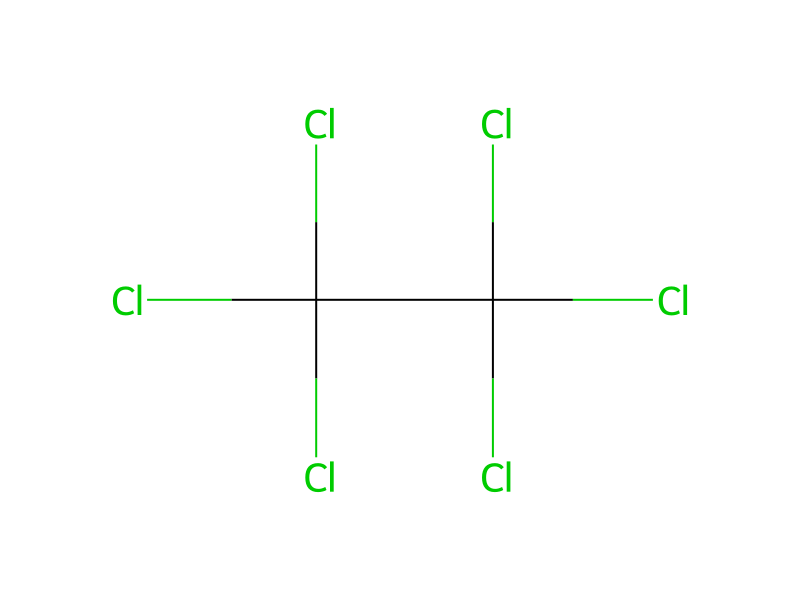
Hexachloroethane → endo-Dicyclopentadiene
Reaction equation

[CH2:1]1[CH:5]2[CH:6]3[CH:10]=[CH:9][CH:8]([CH:4]2[CH:3]=[CH:2]1)[CH2:7]3.C1(C#C)C=CC=CC=1.ClC(Cl)(Cl)C(Cl)(Cl)Cl>>[CH2:1]1[CH:5]2[C@@H:6]3[CH:10]=[CH:9][C@H:8]([CH:4]2[CH:3]=[CH:2]1)[CH2:7]3Participants
4


Procedure
A 10.0 gram (75.6 mmol) amount of dicyclopentadiene was added to a 20 ml scintillation vial. A 5.0 milligram (7.2 μmol) amount of RuClH(H2)(PCy3)2 was added. One equivalent of phenylacetylene and hexachloroethane per equivalent of RuClH(H2)(PCy3)2 was charged via the addition of 0.1 mls each of a 72 mM stock solution of phenylacetylene and hexachloroethane, respectively. The ring opening polymerization of dicyclopentadiene was observed by a gradual thickening of the solution to a rubbery viscous material after six minutes. After one hour a solid rubbery material had formed.
Workup
- customAfter one hour a solid rubbery material had formed
Sources & evidence
- ORD record
- ord-1b13c32323754860b368e1d2add209a1
- Source dataset
- uspto-grants-2012_07
- Patent number
- US08227371B2
Reaction notes
Loading…