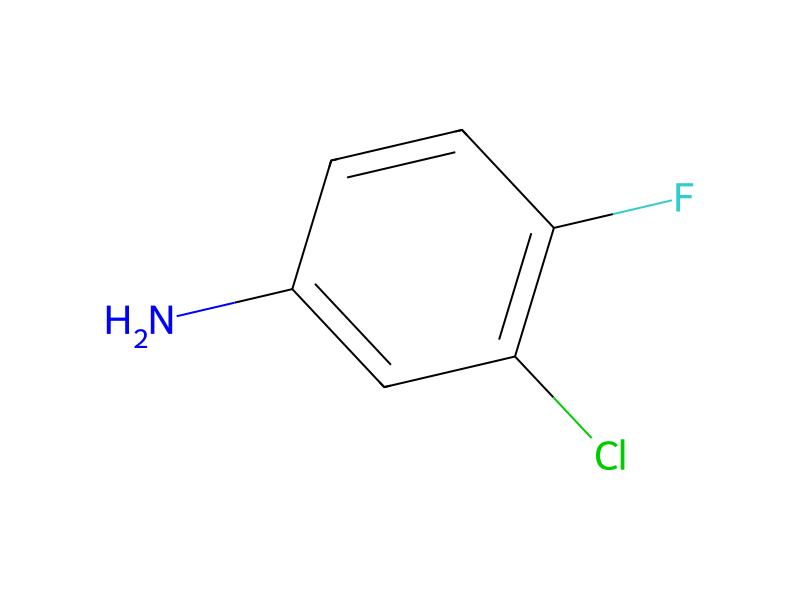
3-Chloro-4-fluoroaniline → HCID 86617309, compound
Reaction equation

Cl[C:2]1[N:3]=[C:4]([N:22]2[CH2:27][CH2:26][NH:25][CH2:24][CH:23]2[C:28](=[O:37])[NH:29][C:30]2[CH:35]=[CH:34][CH:33]=[C:32]([CH3:36])[CH:31]=2)[C:5]2[N:11]=[C:10]([C:12]3[CH:17]=[CH:16][C:15]([O:18][CH3:19])=[C:14]([O:20][CH3:21])[CH:13]=3)[CH:9]=[CH:8][C:6]=2[N:7]=1.C([O-])([O-])=O.[K+].[K+].[Cl:44][C:45]1[CH:46]=[C:47]([CH:49]=[CH:50][C:51]=1[F:52])[NH2:48]>C1C=CC([P]([Pd]([P](C2C=CC=CC=2)(C2C=CC=CC=2)C2C=CC=CC=2)([P](C2C=CC=CC=2)(C2C=CC=CC=2)C2C=CC=CC=2)[P](C2C=CC=CC=2)(C2C=CC=CC=2)C2C=CC=CC=2)(C2C=CC=CC=2)C2C=CC=CC=2)=CC=1.O1CCOCC1.CC(O)(C)C>[Cl:44][C:45]1[CH:46]=[C:47]([CH:49]=[CH:50][C:51]=1[F:52])[NH:48][C:2]1[N:3]=[C:4]([N:22]2[CH2:27][CH2:26][NH:25][CH2:24][CH:23]2[C:28](=[O:37])[NH:29][C:30]2[CH:35]=[CH:34][CH:33]=[C:32]([CH3:36])[CH:31]=2)[C:5]2[N:11]=[C:10]([C:12]3[CH:17]=[CH:16][C:15]([O:18][CH3:19])=[C:14]([O:20][CH3:21])[CH:13]=3)[CH:9]=[CH:8][C:6]=2[N:7]=1Participants





Procedure
A suspension of 2-chloro-4-[(N-3-methyl-phenylcarbamoyl)-piperazin-1-yl]-6-(3,4-dimethoxyphenyl)-pyrido[3,2-d]pyrimidine (106 mg, 0.20 mmole), K2CO3 (62 mg, 0.45 mmole) and 3-chloro-4-fluoroaniline (60 mg 0.40 mmole) in a 1,4-dioxane/t-BuOH 5:1 mixture (2 ml) was purged with nitrogen for 15 minutes. Thereafter, tetrakis(triphenylphosphine)palladium(0) (28 mg, 24 μmol) was added and the reaction mixture was heated at reflux under a N2 atmosphere for 20 hours. Upon cooling, the mixture was partitioned between ethyl acetate and brine. The organic phase was evaporated under reduced pressure and the crude residue was purified by flash chromatography on silica, using an ethyl acetate/n-hexane mixture as the mobile phase (in a ratio gradually ranging from 1:1 to 4:1), thus affording the pure title compound (60 mg, yield 47%) which was characterized by its mass spectrum as follows: MS (m/z): 628 ([M+H]+, 100).
Workup
- customwas purged with nitrogen for 15 minutes
- temperaturethe reaction mixture was heated
- temperatureat reflux under a N2 atmosphere for 20 hours
- temperatureUpon cooling
- customthe mixture was partitioned between ethyl acetate and brine
- customThe organic phase was evaporated under reduced pressure
- customthe crude residue was purified by flash chromatography on silica
Sources & evidence
- ORD record
- ord-1cc3de6d21484023aff9b7b974879cbf
- Source dataset
- uspto-grants-2012_07
- Patent number
- US08232278B2
Reaction notes
Loading…