Ammonium Hydroxide → 5-Bromo-8-nitroisoquinoline
Reaction equation

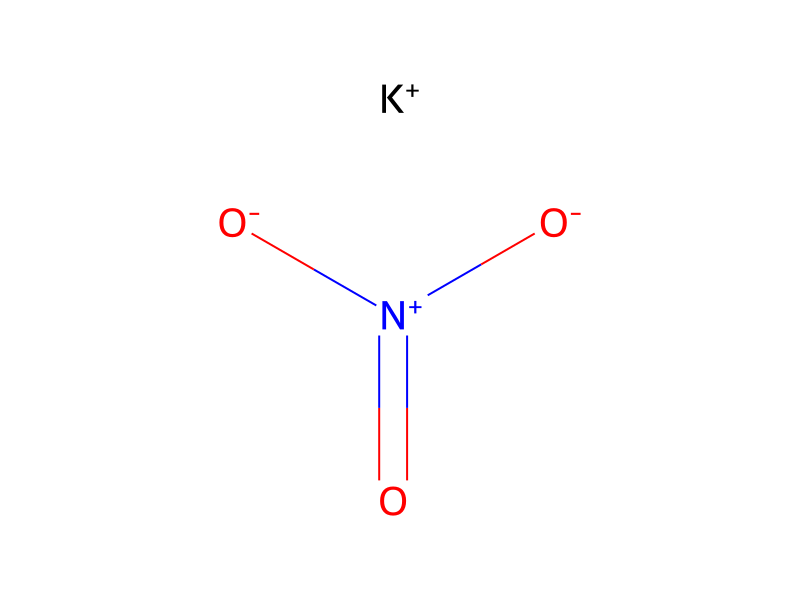
[N+:1]([O-:4])([O-])=[O:2].[K+].[Br:6][C:7]1[CH:16]=[CH:15][CH:14]=[C:13]2[C:8]=1[CH:9]=[CH:10][N:11]=[CH:12]2.[OH-].[NH4+]>S(=O)(=O)(O)O>[Br:6][C:7]1[CH:16]=[CH:15][C:14]([N+:1]([O-:4])=[O:2])=[C:13]2[C:8]=1[CH:9]=[CH:10][N:11]=[CH:12]2Participants
5
Reactant 3


Product 1

Reagents, catalysts & solvents 1

Conditions
- Temperature
- 0 °C
Procedure
KNO3 (5.1 g, 50 mmol) was suspended in sulfuric acid (40 mL) and chilled to 0° C. 5-bromoisoquinoline (4 g, 19.2 mmol) was added slowly over the course of 20 minutes. The yellow, heterogeneous solution was brought to pH 8 by slow addition of ammonium hydroxide. Yellow solid was filtered off and recrystallized from methanol to give 7.5 g of 5-bromo-8-nitroisoquinoline. LCMS showed an m/z of 253.0/255.0 with a retention time of 1.797 min, method [1].
Workup
- filtrationYellow solid was filtered off
- customrecrystallized from methanol
Sources & evidence
- ORD record
- ord-2cf5aff27f58453eb3e0adabaf709c61
- Source dataset
- uspto-grants-2015_07
- Patent number
- US09073891B2
Reaction notes
Loading…