Vinyl Chloride → Vinyl chloride-vinyl acetate
Reaction equation

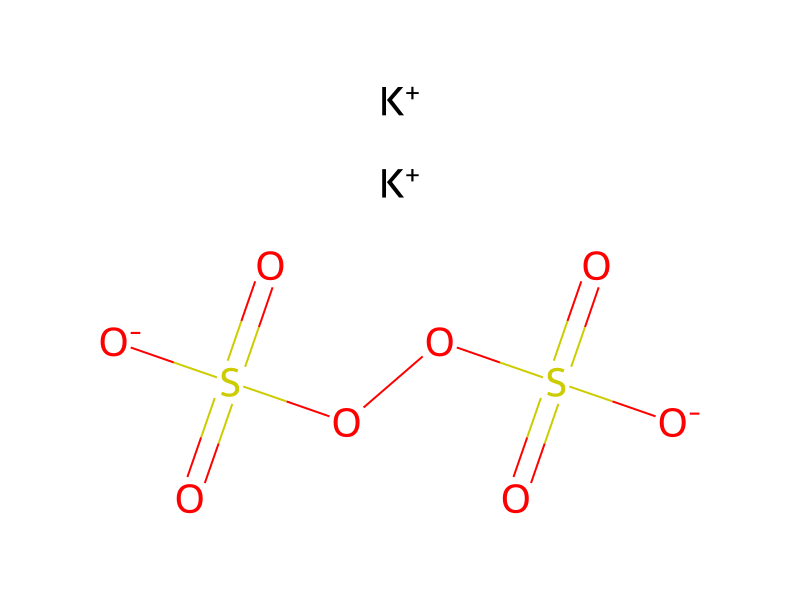
[CH:1]([Cl:3])=[CH2:2].[C:4]([O:7][CH:8]=[CH2:9])(=[O:6])[CH3:5].S(OOS([O-])(=O)=O)([O-])(=O)=O.[K+].[K+].C1(S(OCCCCCCCCCCCC)(=O)=O)C=CC=CC=1.[Na]>O>[C:4]([O:7][CH:8]=[CH2:9])(=[O:6])[CH3:5].[CH:1]([Cl:3])=[CH2:2]Participants
Reactant 4



Product 1

Reagents, catalysts & solvents 1

Conditions
- Temperature
- 60 °C
Procedure
Deionized water 600 g, a monomer mixture consisting of vinyl chloride monomer 438.8 g (97.5% by weight on the basis of the total amount of whole charged monomer) and vinyl acetate 11.2 g (2.5% by weight on the basis of the total amount of whole charged monomer), and potassium persulfate 2.25 g were charged into a 2.5 L autoclave. This reactive mixture was stirred by a stirring blade so as to maintain a rotation speed of 120 rpm, and the polymerization was initiated by raising temperature of the reaction mixture up to 60° C. A 5% by weight aqueous solution of sodium dodecyl benzene sulfonate 180 g (2% by weight on the basis of the total amount of whole charged monomer) were continuously added from the polymerization initiation to 4 hr after the initiation. When the polymerization system had a polymerization pressure drop of 0.6 MPa from the saturated vapor pressure of vinyl chloride monomer at 60° C., the polymerization was terminated, and the remaining monomer was recovered to obtain the vinyl chloride-vinyl acetate type emulsion.
Workup
- additionwere charged into a 2.5 L autoclave
- temperatureto maintain a rotation speed of 120 rpm
- customthe polymerization was terminated
- customthe remaining monomer was recovered
Sources & evidence
- ORD record
- ord-190232e33ab34c73aa533b4e1e8e4970
- Source dataset
- uspto-grants-2015_07
- Patent number
- US09079445B2
Reaction notes
Loading…