3-Quinuclidinone → 3-Quinuclidinol, (-)-
Reaction equation

[N:1]12[CH2:8][CH2:7][CH:4]([CH2:5][CH2:6]1)[C:3](=[O:9])[CH2:2]2.CC([O-])(C)C.[K+]>CC(O)C>[N:1]12[CH2:8][CH2:7][CH:4]([CH2:5][CH2:6]1)[C@@H:3]([OH:9])[CH2:2]2Participants
4
Reactant 2
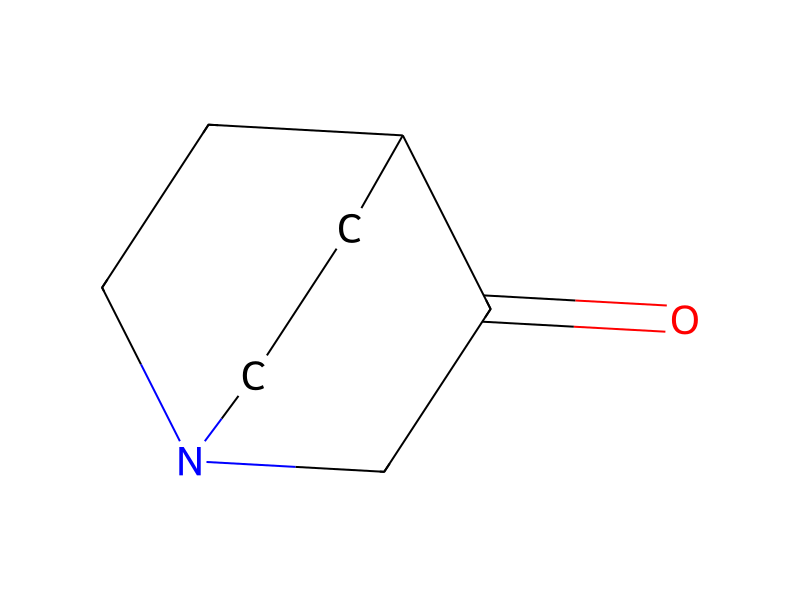

Product 1

Reagents, catalysts & solvents 1

Conditions
- Temperature
- 30 °C
Procedure
To a 100 mL autoclave with a stirrer, 3-quinuclidinone (1.0 g, 8.0 mmol) and trans-RuCl2[(R)-dm-segphos][(R)-daipen] (0.5 mg, 0.40 μmol, 1/20,000 molar fold of 3-quinuclidinone) were added. After purging with nitrogen, 2-propanol (6 mL) and 2-propanol solution of t-BuOK (0.1 mol/L, 0.4 mL, 0.04 mmol) were added. Subsequently, the autoclave was purged with hydrogen, the mixture was stirred at 30° C. for 6 hours under hydrogen pressure of 3 MPa. As a result of analysis of the reaction solution, it was found that the conversion rate is 26.7% and the optical purity is 89.7% ee.
Workup
- additionwere added
- customSubsequently, the autoclave was purged with hydrogen
- customAs a result of analysis of the reaction solution, it
Sources & evidence
- ORD record
- ord-98a58dc9a3814d3083191ff2b8b07eb9
- Source dataset
- uspto-grants-2015_07
- Patent number
- US09079931B2
Reaction notes
Loading…