Potassium Carbonate → (+)-2-(4-Ethyl-3-oxo-1-oxa-4,9-diazaspiro[5.5]undecan-9-yl)-2-(2-fluoro-4-(8-fluoroquinolin-7-yl)phenyl)acetamide
Reaction equation

Br[C:2]1[CH:7]=[CH:6][C:5]([CH:8]([N:12]2[CH2:25][CH2:24][C:15]3([O:20][CH2:19][C:18](=[O:21])[N:17]([CH2:22][CH3:23])[CH2:16]3)[CH2:14][CH2:13]2)[C:9]([NH2:11])=[O:10])=[C:4]([F:26])[CH:3]=1.B1(B2OC(C)(C)C(C)(C)O2)OC(C)(C)C(C)(C)O1.C([O-])(=O)C.[K+].C(=O)([O-])[O-].[K+].[K+].Br[C:57]1[C:66]([F:67])=[C:65]2[C:60]([CH:61]=[CH:62][CH:63]=[N:64]2)=[CH:59][CH:58]=1>O1CCOCC1.ClCCl.C1C=CC(P(C2C=CC=CC=2)[C-]2C=CC=C2)=CC=1.C1C=CC(P(C2C=CC=CC=2)[C-]2C=CC=C2)=CC=1.Cl[Pd]Cl.[Fe+2].C(Cl)Cl>[CH2:22]([N:17]1[CH2:16][C:15]2([CH2:24][CH2:25][N:12]([CH:8]([C:5]3[CH:6]=[CH:7][C:2]([C:57]4[C:66]([F:67])=[C:65]5[C:60]([CH:61]=[CH:62][CH:63]=[N:64]5)=[CH:59][CH:58]=4)=[CH:3][C:4]=3[F:26])[C:9]([NH2:11])=[O:10])[CH2:13][CH2:14]2)[O:20][CH2:19][C:18]1=[O:21])[CH3:23]Participants
Reactant 5




Product 1

Reagents, catalysts & solvents 3


Conditions
- Temperature
- 90 °C
Procedure
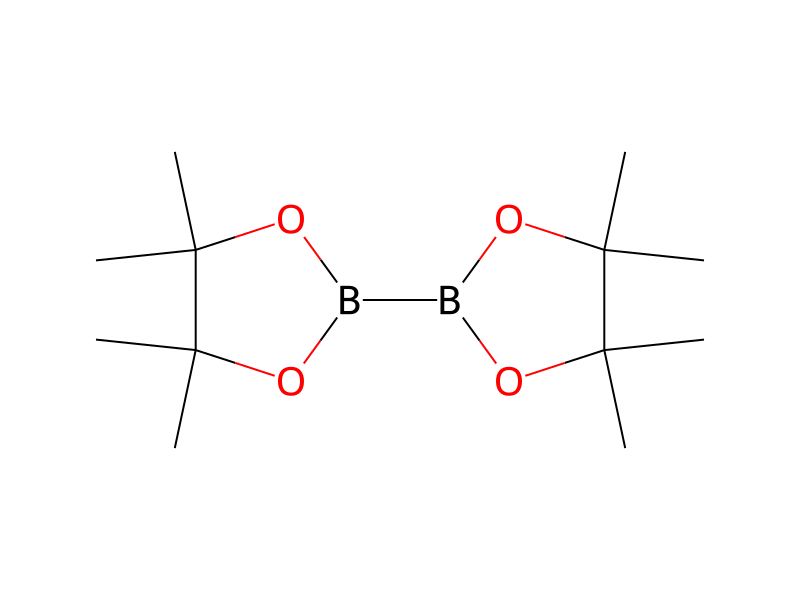
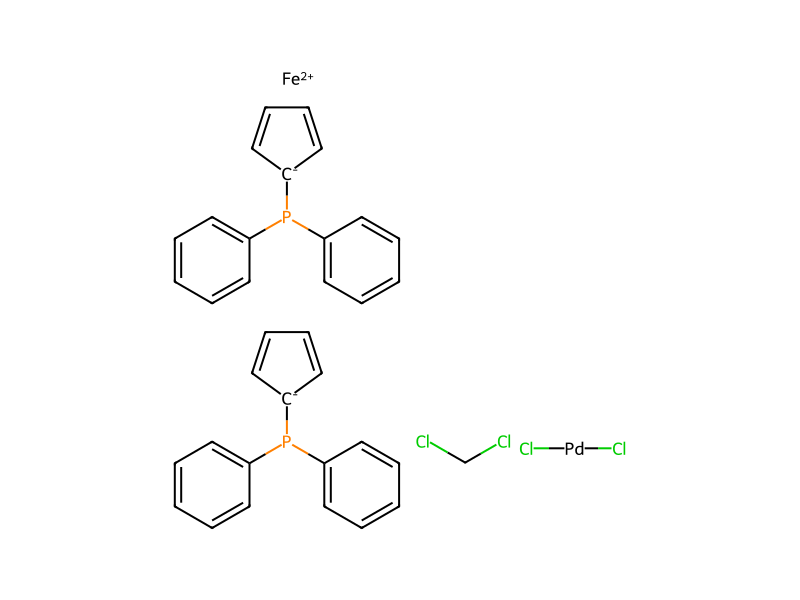
A 20 mL reaction vial equipped with a stirbar was charged with 2-(4-bromo-2-fluorophenyl)-2-(4-ethyl-3-oxo-1-oxa-4,9-diazaspiro[5.5]undecan-9-yl)acetamide (0.150 g, 0.350 mmol), bis(pinacolato)diboron (0.205 g, 0.806 mmol), PdCl2(dppf)-CH2Cl2 adduct (0.020 g, 0.025 mmol), and potassium acetate (0.076 g, 0.770 mmol). The solids were diluted with 1,4-dioxane (3.12 mL) and the reaction mixture was warmed to 90° C. with stirring overnight. The reaction mixture was then treated with PdCl2(dppf)-CH2Cl2 adduct (0.020 g, 0.025 mmol), 2M aq potassium carbonate (0.385 mL, 0.770 mmol), and 7-bromo-8-fluoroquinoline (0.091 g, 0.403 mmol), and the resulting reaction mixture was stirred at 90° C. for 1 h. The mixture was then diluted with 20 mL dichloromethane and filtered through a stacked pad of sodium sulfate over celite. The filtrate was concentrated to a residue, which was purified by silica gel flash chromatography (0.5-10% methanol:ethyl acetate). Fractions containing the desired material were pooled and concentrated to a hard lacquer and the product was resolved by chiral preparative HPLC (Chromegachiral CC4, 100% methanol) to afford the title compound in >99% ee as an off white solid (42 mg, 0.081 mmol, 23% yield). MS(ES)+ m/e 495.4 [M+H]+. αD=+40 deg (c=0.06, methanol).
Workup
- customA 20 mL reaction
- customvial equipped with a stirbar
- customthe resulting reaction mixture
- stirringwas stirred at 90° C. for 1 h
- filtrationfiltered through a stacked pad of sodium sulfate over celite
- concentrationThe filtrate was concentrated to a residue, which
- customwas purified by silica gel flash chromatography (0.5-10% methanol:ethyl acetate)
- additionFractions containing the desired material
- concentrationconcentrated to a hard lacquer
Sources & evidence
- ORD record
- ord-f7ed6907eb9546e2b690aeead39139a5
- Source dataset
- uspto-grants-2015_07
- Patent number
- US09084794B2
Reaction notes
Loading…