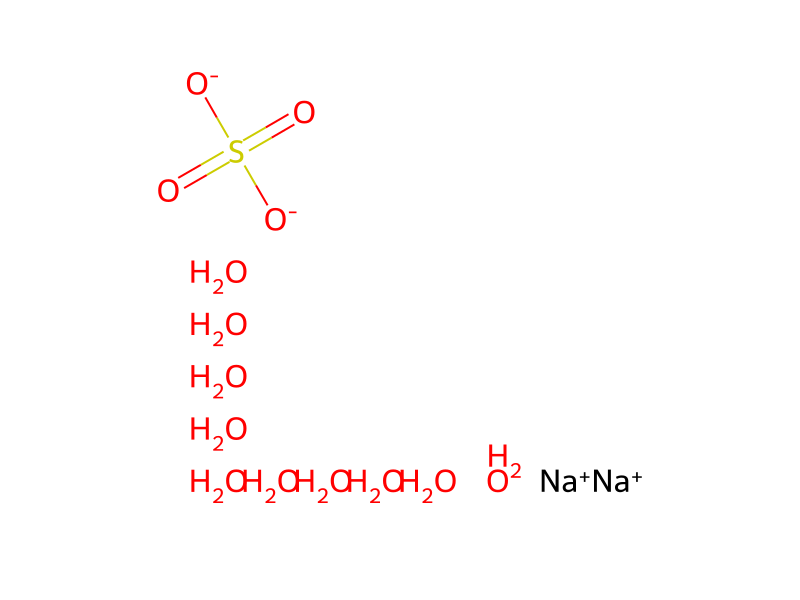
Sodium sulfate decahydrate → HCID 66803090, compound
Reaction equation

[H-].[Al+3].[Li+].[H-].[H-].[H-].[CH3:7][C:8]1([CH3:18])[C:13](=O)[NH:12][C@H:11]2[CH2:15][CH2:16][CH2:17][C@H:10]2[NH:9]1.O.O.O.O.O.O.O.O.O.O.S([O-])([O-])(=O)=O.[Na+].[Na+].[H][H]>O1CCOCC1>[CH3:7][C:8]1([CH3:18])[NH:9][C@H:10]2[CH2:17][CH2:16][CH2:15][C@H:11]2[NH:12][CH2:13]1Participants





Procedure
Lithium aluminum hydride (541 mg, 14.3 mmol) was added to an anhydrous dioxane (40 mL) solution of cis-3,3-dimethyloctahydrocyclopentapyrazin-2-one (2.00 g, 11.9 mmol) with stirring at room temperature, and the mixture was gradually heated and stirred for 10 minutes under reflux. The reaction mixture was cooled to ice temperature. Then, sodium sulfate decahydrate was added thereto in small portions until no hydrogen gas was generated. Then, the mixture was stirred at room temperature for 1 hour. Insoluble matter was filtered through celite, and the filtrate was concentrated. The obtained residue was purified by basic silica gel column chromatography (ethyl acetate/hexane= 1/10) to obtain cis-2,2-dimethyloctahydro-1H-cyclopenta[b]pyrazine (1.67 g, 91%) in a pale yellow oil form.
Workup
- temperaturethe mixture was gradually heated
- stirringstirred for 10 minutes
- temperatureunder reflux
- temperatureThe reaction mixture was cooled to ice temperature
- stirringThen, the mixture was stirred at room temperature for 1 hour
- filtrationInsoluble matter was filtered through celite
- concentrationthe filtrate was concentrated
- customThe obtained residue was purified by basic silica gel column chromatography (ethyl acetate/hexane= 1/10)
Sources & evidence
- ORD record
- ord-079feefae1ca45a39f275a4da698897c
- Source dataset
- uspto-grants-2015_07
- Patent number
- US09090572B2
Reaction notes
Loading…