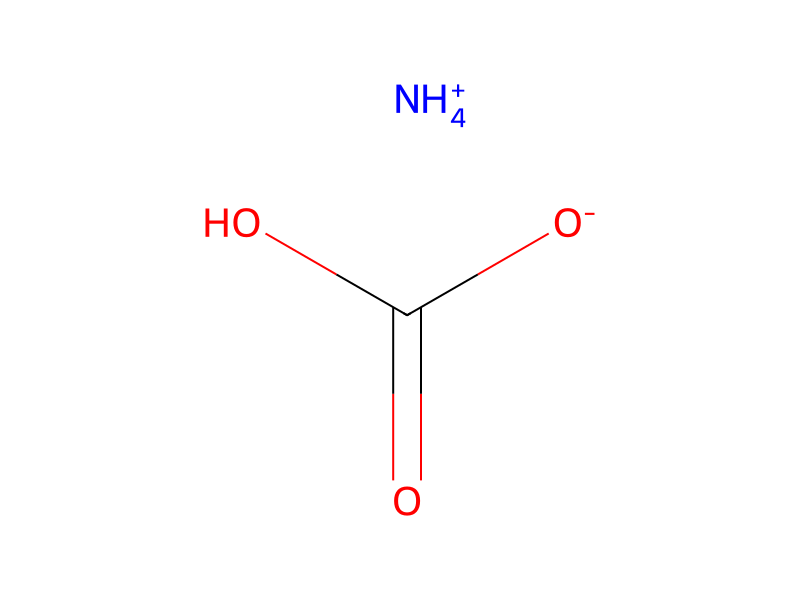
Ammonium Bicarbonate → Glycyl-L-tyrosine
Reaction equation

C(=O)([O-])O.[NH4+:5].Cl[CH2:7][C:8]([NH:10][C@H:11]([C:20]([OH:22])=[O:21])[CH2:12][C:13]1[CH:18]=[CH:17][C:16]([OH:19])=[CH:15][CH:14]=1)=[O:9]>N.O>[NH2:5][CH2:7][C:8]([NH:10][C@H:11]([C:20]([OH:22])=[O:21])[CH2:12][C:13]1[CH:18]=[CH:17][C:16]([OH:19])=[CH:15][CH:14]=1)=[O:9]Participants
5
Reactant 2

Product 1

Reagents, catalysts & solvents 2


Conditions
- Temperature
- 40 °C
Procedure
Ammonium hydrogencarbonate (1289 g) was dissolved in a mixture of 4000 ml of 28% aqueous ammonia and 1000 ml of distilled water at 35° C. To the solution were added 700 g (2.72 mol) of N-chloroacetyl-L-tyrosine and 700 ml of distilled water, followed by stirring at 40° C. for 5 hours. The reaction mixture was concentrated under reduced pressure to remove excess ammonia and then adjusted to pH 5.5 with concentrated hydrochloric acid at 45° C., followed by gradual cooling. After crystals were deposited, the mixture was ice-cooled and the crystals were isolated by filtration to give 600 g (489 g on anhydrous basis, 2.05 mol, 75.4%) of crude crystals of N-glycyl-L-tyrosine.
Workup
- concentrationThe reaction mixture was concentrated under reduced pressure
- customto remove excess ammonia
- customadjusted to pH 5.5 with concentrated hydrochloric acid at 45° C.
- temperaturecooled
- customthe crystals were isolated by filtration
Sources & evidence
- ORD record
- ord-30c8d1b2f7a44c748de54590ed461828
- Source dataset
- uspto-grants-2001_03
- Patent number
- US06197998B1
Reaction notes
Loading…