1,1,1,2-Tetrachloroethane → 3-(3-Fluoro-5-chloro-2-pyridyl)-5-bromo-1-methyl-[1H]-pyrazole
Reaction equation

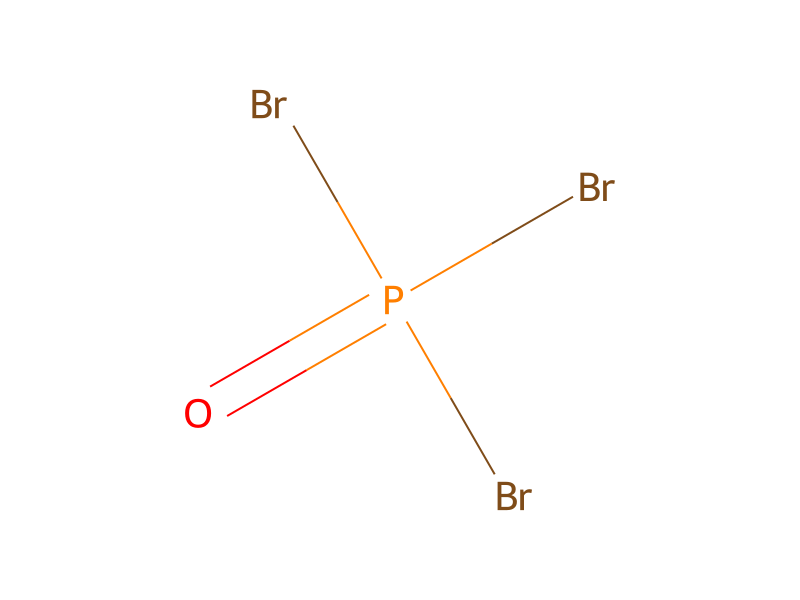
[F:1][C:2]1[C:3]([C:9]2[CH:13]=[C:12](O)[N:11]([CH3:15])[N:10]=2)=[N:4][CH:5]=[C:6]([Cl:8])[CH:7]=1.ClCC(Cl)(Cl)Cl.P(Br)(Br)([Br:24])=O.[OH-].[Na+]>C(OCC)C>[F:1][C:2]1[C:3]([C:9]2[CH:13]=[C:12]([Br:24])[N:11]([CH3:15])[N:10]=2)=[N:4][CH:5]=[C:6]([Cl:8])[CH:7]=1Participants





Conditions
- Temperature
- 130 °C
Procedure
20.0 g of 3-(3-fluoro-5-chloro-2-pyridyl)-5-hydroxy-1-methyl-[1H]-pyrazole (Example H14) are initially introduced into 80 ml of tetrachloroethane. A total of 25.2 g of phosphorus oxybromide (POBr3) are added in portions to the brown suspension and the mixture is then stirred at a temperature of 130° C. for 2 hours. Thereafter, it is cooled and 150 ml of a 2 molar sodium hydroxide solution are added dropwise, while cooling with an ice-bath. After addition of diethyl ether and separation of the phases, the organic phase is washed successively with water, dilute hydrochloric acid and brine, dried over sodium sulfate, filtered and concentrated in vacuo. 19.94 g of a brown solid are obtained as the crude product, and this solid is purified by means of digestion with 50 ml of n-hexane. 12.65 g of the desired title compound are obtained as a brown solid of melting point 110-111° C.
Workup
- temperatureThereafter, it is cooled
- temperaturewhile cooling with an ice-bath
- washthe organic phase is washed successively with water, dilute hydrochloric acid and brine
- dry with materialdried over sodium sulfate
- filtrationfiltered
- concentrationconcentrated in vacuo
Sources & evidence
- ORD record
- ord-1f18caf9a05d4a5f9564df1615132eaa
- Source dataset
- uspto-grants-2001_03
- Patent number
- US06204221B1
Reaction notes
Loading…