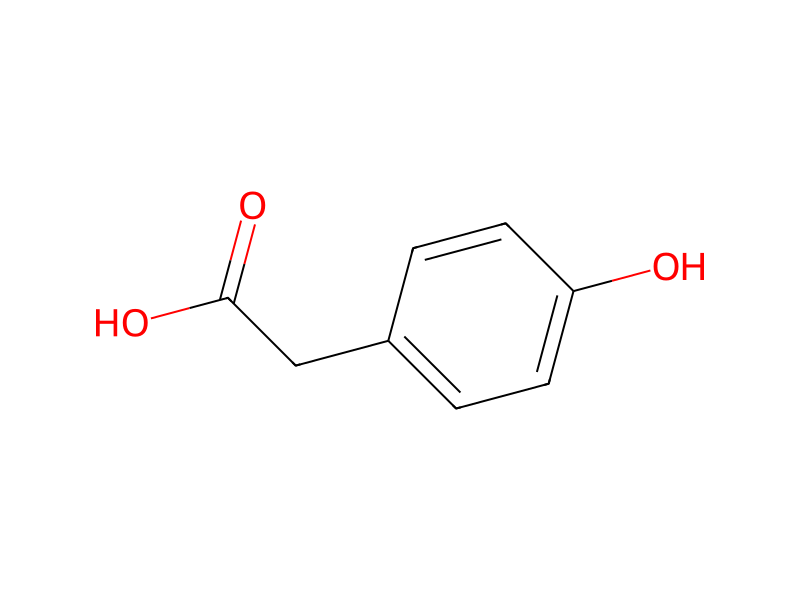
Hydroxyphenylacetic acid → HCID 19910175, compound
Reaction equation

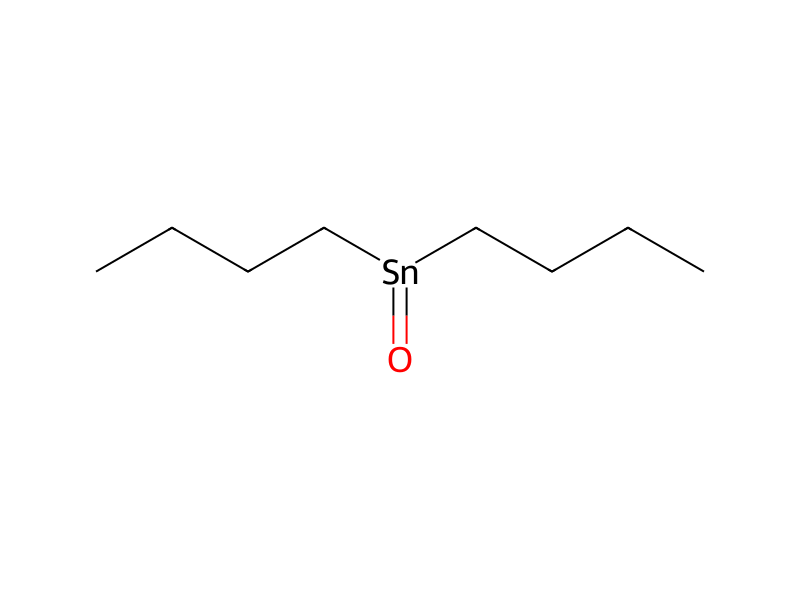
[CH2:1]([Sn:5](=O)[CH2:6][CH2:7][CH2:8][CH3:9])[CH2:2][CH2:3][CH3:4].[OH:11][C:12]1[CH:17]=[CH:16][C:15]([CH2:18][C:19]([OH:21])=[O:20])=[CH:14][CH:13]=1.C1(C)C=CC=CC=1>O>[OH:11][C:12]1[CH:13]=[CH:14][C:15]([CH2:18][C:19]([O-:21])=[O:20])=[CH:16][CH:17]=1.[OH:11][C:12]1[CH:13]=[CH:14][C:15]([CH2:18][C:19]([O-:21])=[O:20])=[CH:16][CH:17]=1.[CH2:1]([Sn+2:5][CH2:6][CH2:7][CH2:8][CH3:9])[CH2:2][CH2:3][CH3:4]Participants
5
Reactant 3

Product 1

Reagents, catalysts & solvents 1

Procedure
A mixture of 24.9 g (0.10 moles) dibutyltin oxide, 30.4 g (0.20 mole) 4-hydroxyphenylacetic acid, and 300 ml toluene were charged to a 3-necked round bottom flask equipped with a stirrer, thermocouple or thermometer, and condenser with a DEAN-STARK water trap, and heated at reflux temperature until all the water of reaction was collected in the trap. The toluene was removed using a flash evaporator to yield 53 g (99%) of dibutyltin bis(4-hydroxyphenyl acetate) having a melting point of 121°-126° C.
Workup
- additionwere charged to a 3-necked round bottom flask
- customequipped with a stirrer
- temperaturethermocouple or thermometer, and condenser with a DEAN-STARK water trap, and heated
- temperatureat reflux temperature until all
- customwas collected in the trap
- customThe toluene was removed
- customa flash evaporator
Sources & evidence
- ORD record
- ord-318803cb212d45b5ad4bbb939b60e81b
- Source dataset
- uspto-grants-1992_02
- Patent number
- US05089645
Reaction notes
Loading…