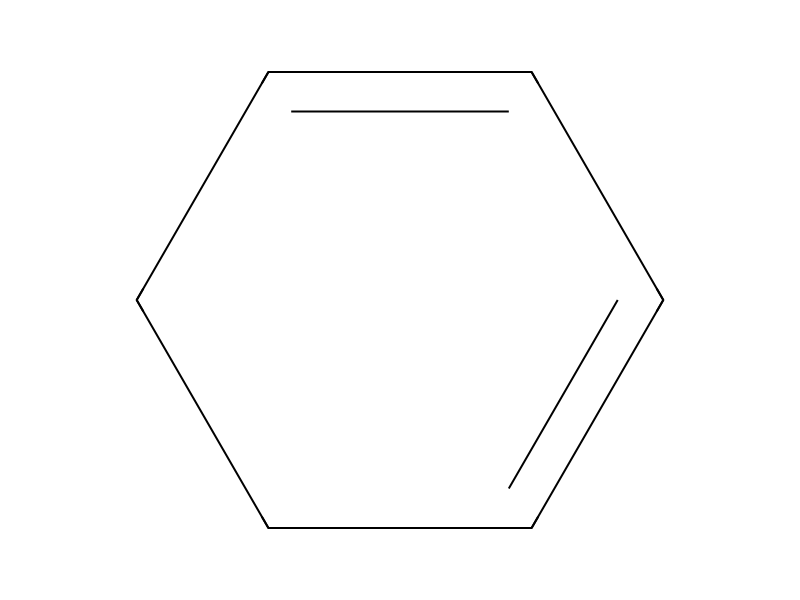
1,3-Cyclohexadiene → 3-(3,4-Dichlorophenyl)bicyclo[2.2.2]oct-5-ene-2-carbonitrile
Reaction equation

[Cl:1][C:2]1[CH:3]=[C:4]([CH:9]=[CH:10][C:11]=1[Cl:12])/[CH:5]=[CH:6]/[C:7]#[N:8].[CH:13]1[CH2:18][CH2:17][CH:16]=[CH:15][CH:14]=1>>[C:7]([CH:6]1[CH:5]([C:4]2[CH:9]=[CH:10][C:11]([Cl:12])=[C:2]([Cl:1])[CH:3]=2)[CH:15]2[CH2:16][CH2:17][CH:18]1[CH:13]=[CH:14]2)#[N:8]Participants
3


Procedure
trans-3,4-Dichlorocinnamonitrile (20 g.) and cyclohexadiene (16 g.) were heated at 150°C. for 3 weeks. The solution was evaporated, the resultant oil purified by column chromatography and crystallised from methanol to yield white crystals of 5-cyano-6-(3',4'-dichlorophenyl)bicyclo[2,2,2]oct-2-ene. The latter (14 g.) was hydrogenated as described in Example 1 to yield trans-3-cyano-2-(3',4'-dichlorophenyl)bicyclo[2,2,2]octane as white crystals (14 g.). Similarly the following compounds were prepared:
Workup
- customThe solution was evaporated
- customthe resultant oil purified by column chromatography
- customcrystallised from methanol
Sources & evidence
- ORD record
- ord-d05043cd0c0f432d85bdb566d42530c7
- Source dataset
- uspto-grants-1976_09
- Patent number
- US03980785
Reaction notes
Loading…