Hydrochloric Acid → Quinoline Yellow
Reaktionsgleichung

S[CH2:2][CH2:3][OH:4].CN1[CH2:10][CH2:9][CH2:8][C:7]1=[O:11].CC(O)C[N:15]([CH2:20][CH:21](O)[CH3:22])[CH2:16][CH:17](O)[CH3:18].Cl>O>[CH:16]1[CH:18]=[C:17]2[CH:22]=[CH:21][C:20]([CH:2]3[C:7](=[O:11])[C:8]4[C:20](=[CH:21][CH:22]=[CH:10][CH:9]=4)[C:3]3=[O:4])=[N:15][C:16]2=[CH:18][CH:17]=1Komponenten
6
Edukt 4

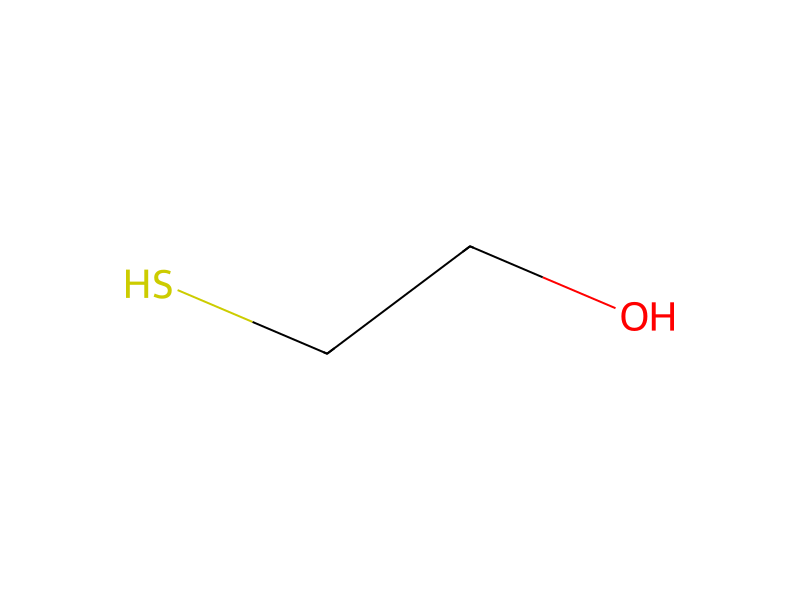


Produkt 1

Reagenzien, Katalysatoren, Lösungsmittel 1

Reaktionsbedingungen
- Temperatur
- 180 °C
Versuchsvorschrift
23 parts of the reaction product obtained according to Example 15 are reacted with 10 parts of 2-mercaptoethanol in 50 parts of volume of N-methylpyrrolidone with an addition of 32 parts of triisopropanolamine by heating for 8 hours at 180°C while stirring. The whole is dripped into a mixture of 1500 parts of water, 1500 parts of ice and 40 parts of 10N hydrochloric acid while stirring well. The dye thus precipitated is suction filtered, washed with water and dried. The quinophthalone derivative obtained as a yellow powder colors polyesters yellow hues having outstanding fastness properties. It probably has the formula: ##SPC17##
Aufarbeitung
- custom23 parts of the reaction product obtained
- stirringwhile stirring well
- customThe dye thus precipitated
- filtrationfiltered
- washwashed with water
- customdried
Quellen und Nachweise
- ORD-Eintrag
- ord-ae6cc6d4315f498a931123fc4633ad6e
- Quelldatensatz
- uspto-grants-1976_09
- Patentnummer
- US03981873
Notizen zur Reaktion
Wird geladen…