Methacrolein → 1,2-Butanediol
Reaction equation

[O:1]=[CH:2][C:3](=[CH2:5])[CH3:4].C(OCC=C)(=[O:8])C.[CH:13]([OH:18])(O)[CH2:14][CH2:15][CH3:16].C(O)CCC[OH:23]>C(O)(=O)C.O>[CH3:5][CH:3]([CH2:4][OH:8])[CH2:2][OH:1].[CH2:13]([OH:18])[CH:14]([OH:23])[CH2:15][CH3:16]Participants
Reactant 4

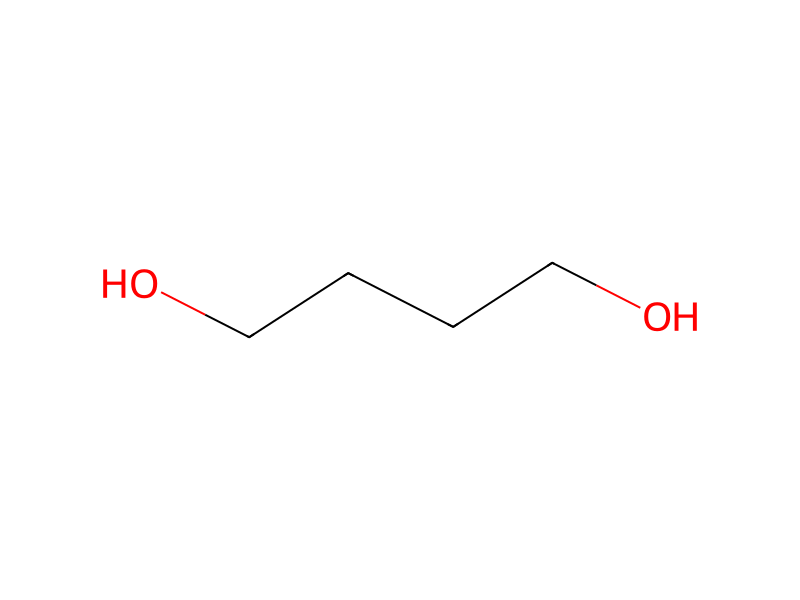


Product 2


Reagents, catalysts & solvents 2


Conditions
- Temperature
- 130 °C
Procedure
The low boiling components of the hydrogenation mixture (principally water, acetic acid and hydrogenation products derived from methacrolein and allyl acetate) are distilled off under reduced pressure. The residue is subjected to the magnesia - promoted methanolysis in a manner similar to that described in Example II. It is passed continuously down through an 8 ft. × 1 in. diameter tube packed with one liter of the catalyst described in Example II and maintained at 130°C, against a countercurrent of methanol vapor (2000 grams per 800 gram charge per hour). Methyl acetate and the excess methanol are condensed from the top effluent, and a butanediol-rich trickle phase is taken into the boiler. Analysis of the latter (in a case using a single charge) by quantitative glpc shows the presence of 248 g of 1.4 - butanediol (69% yield in the conversion from allyl acetate), 17 grams of 2-methyl-1,3-propanediol (5% yield), and 47 grams of 1,2-butanediol (13% yield).
Workup
- distillationare distilled off under reduced pressure
- customdiameter tube packed with one liter of the catalyst
- customcondensed from the top effluent
- additiona single charge) by quantitative glpc
Sources & evidence
- ORD record
- ord-29375fc2b3c74f6daf204b96a6513d6f
- Source dataset
- uspto-grants-1976_09
- Patent number
- US03981931
Reaction notes
Loading…