1,2-Dichloroethane → (-)-N-Acetylphenylalanine
Reaction equation

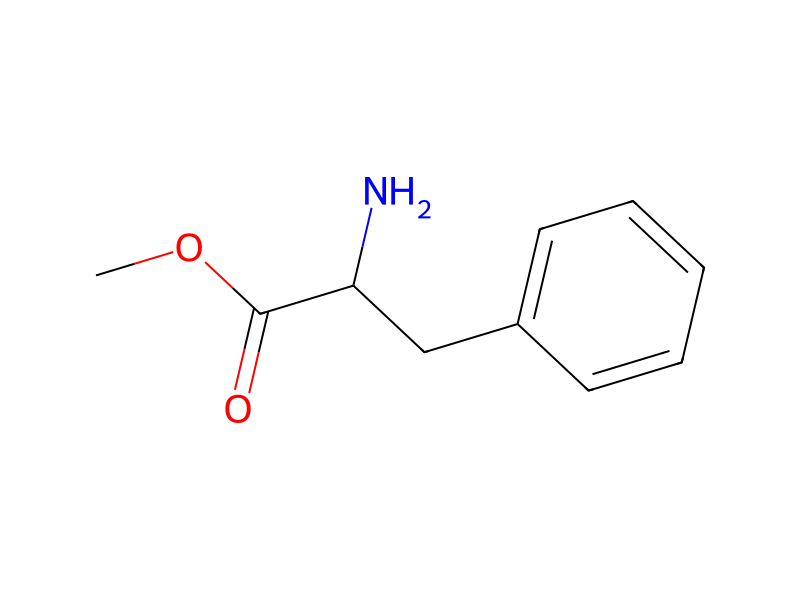
[C:1]([NH:4][C@@H:5]([C:13]([OH:15])=[O:14])[CH2:6][C:7]1[CH:12]=[CH:11][CH:10]=[CH:9][CH:8]=1)(=[O:3])[CH3:2].[CH3:16][O:17][C:18](=[O:28])[CH:19]([CH2:21][C:22]1[CH:27]=[CH:26][CH:25]=[CH:24][CH:23]=1)[NH2:20].CO.C(Cl)CCl>O>[C:1]([NH:4][C@@H:5]([C:13]([OH:15])=[O:14])[CH2:6][C:7]1[CH:8]=[CH:9][CH:10]=[CH:11][CH:12]=1)(=[O:3])[CH3:2].[CH3:16][O:17][C:18](=[O:28])[C@H:19]([CH2:21][C:22]1[CH:27]=[CH:26][CH:25]=[CH:24][CH:23]=1)[NH2:20]Participants





Procedure
Typically, N-acetyl-D-phenylalanine is allowed to contact DL-phenylalanine methyl ester in a suitable solvent, e.g. methanol, ethylene chloride or water, to produce a crude crystalline salt of N-acetyl-D-phenylalanine and L-phenylalanine methyl ester. That salt is separated from the filtrate, purified and decomposed with aqueous hydrochloric acid to afford N-acetyl-D-phenylalanine as a precipitate and L-phenylalanine methyl ester hydrochloride in solution. After filtering, the solvent in the filtrate is removed to afford the hydrochloride salt of L-phenylalanine methyl ester. Alternatively, the salt of N-acetyl-D-phenylalanine and L-phenylalanine methyl ester is dissolved in aqueous potassium carbonate and extracted with ether. The D-amide remains in the aqueous phase and the L-ester is extracted into the organic phase. After phase separation, the ethereal solution is acidified with hydrochloric acid-isopropanol to precipitate the hydrochloride salt of L-phenylalanine methyl ester.
Sources & evidence
- ORD record
- ord-e24ef0471b3149998491bd121d5da418
- Source dataset
- uspto-grants-1976_09
- Patent number
- US03983162
Reaction notes
Loading…