Bromomethyl 4-methoxyphenyl ketone → HCID 21510501, compound
Reaction equation

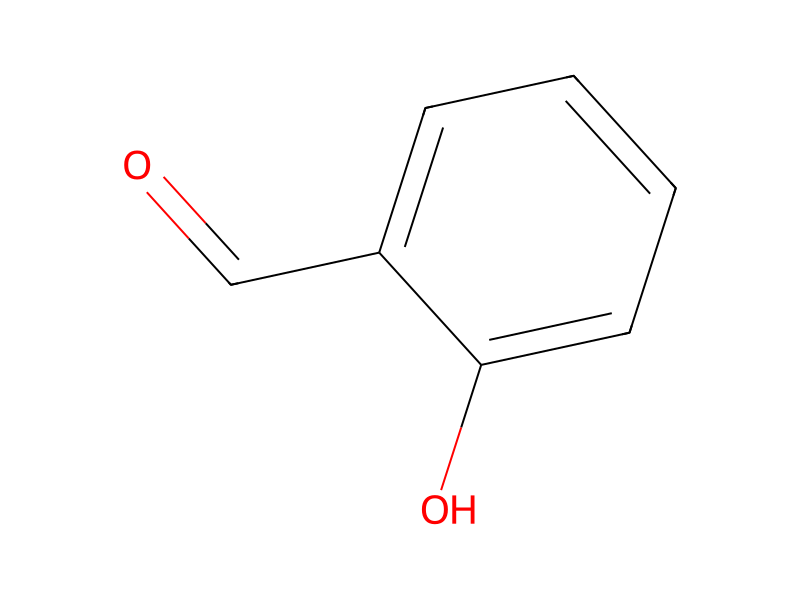
OC1C=CC=CC=1C(=O)C.C(=O)C1C(=CC=CC=1)O.BrCC(C1C=CC(OC)=CC=1)=O.BrCC(C1C=CC(Cl)=CC=1)=O.[CH3:43][C:44]1[C:48]2[CH:49]=[CH:50][CH:51]=[CH:52][C:47]=2[O:46][C:45]=1[C:53](=[O:62])[C:54]1[CH:59]=[CH:58][C:57]([O:60]C)=[CH:56][CH:55]=1>>[CH3:43][C:44]1[C:48]2[CH:49]=[CH:50][CH:51]=[CH:52][C:47]=2[O:46][C:45]=1[C:53](=[O:62])[C:54]1[CH:59]=[CH:58][C:57]([OH:60])=[CH:56][CH:55]=1Participants
6



Procedure
When an equivalent amount of o-hydroxyacetophenone is substituted in the procedure of Example 11 for salicylaldehyde and α-bromo-p-methoxyacetophenone is substituted for α-bromo-p-chloroacetophenone, there is ultimately obtained 3-methyl-2-(4-methoxybenzoyl)benzofuran. Demethylation of 3-methyl-2-(4-methoxybenzoyl)-benzofuran as described above gives 3-methyl-2-(4-hydroxybenzoyl)benzofuran.
Sources & evidence
- ORD record
- ord-c25abd274cad4fd5842c0682a02bf2e9
- Source dataset
- uspto-grants-1976_09
- Patent number
- US03983245
Reaction notes
Loading…