Water → Sulfinpyrazone
Reaction equation

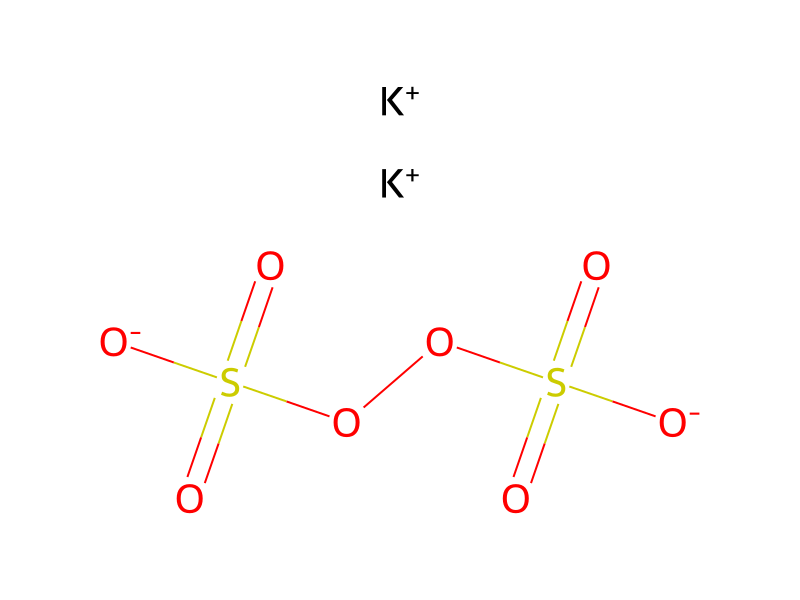
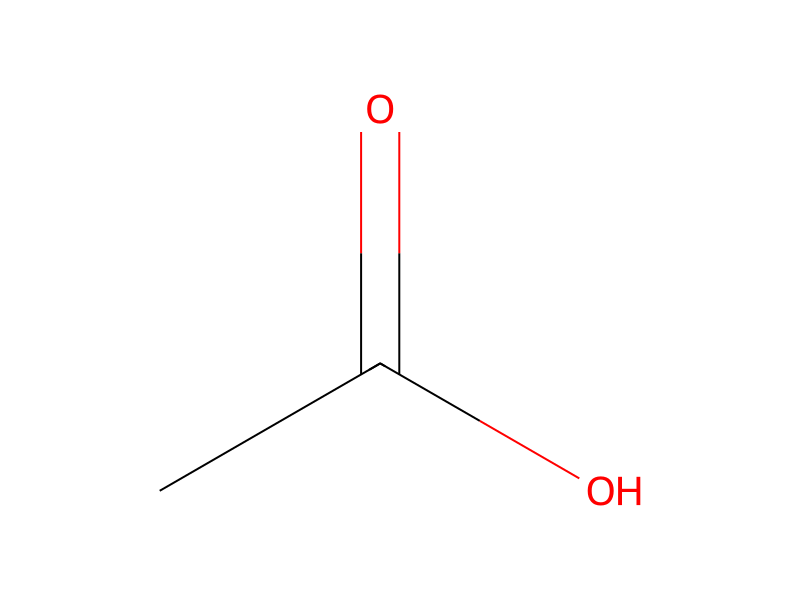
[C:1]1([N:7]2[C:11](=[O:12])[CH:10]([CH2:13][CH2:14][S:15][C:16]3[CH:21]=[CH:20][CH:19]=[CH:18][CH:17]=3)[C:9](=[O:22])[N:8]2[C:23]2[CH:28]=[CH:27][CH:26]=[CH:25][CH:24]=2)[CH:6]=[CH:5][CH:4]=[CH:3][CH:2]=1.[OH:29]OS(O)(=O)=O.S(OOS([O-])(=O)=O)([O-])(=O)=O.[K+].[K+].O>C(O)(=O)C>[C:1]1([N:7]2[C:11](=[O:12])[CH:10]([CH2:13][CH2:14][S:15]([C:16]3[CH:17]=[CH:18][CH:19]=[CH:20][CH:21]=3)=[O:29])[C:9](=[O:22])[N:8]2[C:23]2[CH:24]=[CH:25][CH:26]=[CH:27][CH:28]=2)[CH:2]=[CH:3][CH:4]=[CH:5][CH:6]=1Participants
Reactant 4


Product 1

Reagents, catalysts & solvents 1
Procedure
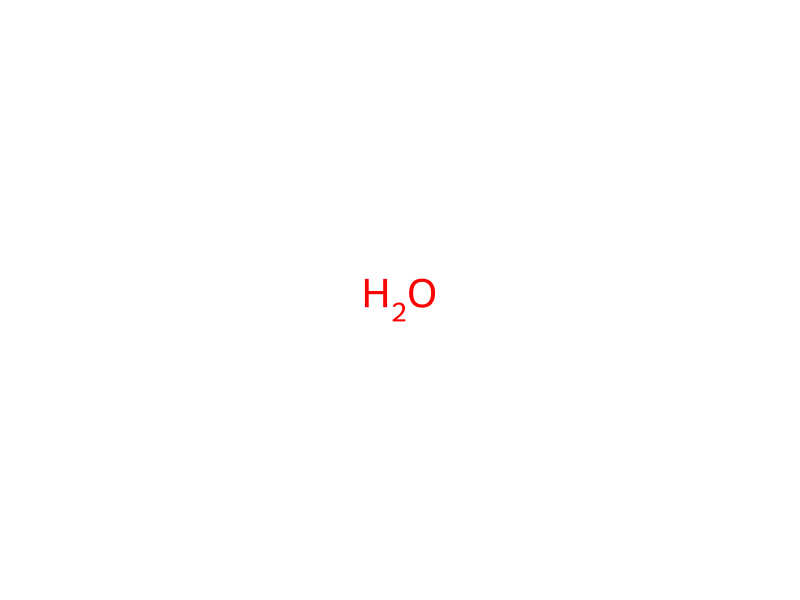
Oxidation of 1,2-diphenyl-4-[2-(phenylthio)ethyl]-3,5-pyrazolidinedione with the above solution of Caro's acid gives 1,2-diphenyl-4-[2-(phenylsulfinyl)ethyl]-3,5-pyrazolidinedione. With respect to 1,2-diphenyl-4-[2-(phenylthio)ethyl]-3,5-pyrazolidinedione, about 1.0 to 2.0 molar equivalents, preferably 1.3 to 1.5 molar equivalents, of Caro's acid is required. These amounts of Caro's acid are based upon the potassium persulfate used to make up the Caro's acid. When performing the oxidation, a solvent is used to dissolve the starting material, 1,2-diphenyl-4-[2-(phenylthio)ethyl]-3,5-pyrazolidinedione. Suitable solvents are inert water miscible solvents; for example, lower alkanols containing up to four carbon atoms and lower alkanoic acids containing two to four carbon atoms, or mixtures thereof. A useful solvent is acetic acid which can be used in amounts ranging from about 100 to 200 molar equivalents of acetic acid with respect to the starting material. The starting material is first dissolved in the glacial acetic acid and then the Caro's acid is added. The solution of 1,2-diphenyl-4-[2-(phenylthio)ethyl]-3,5-pyrazolidinedione, aqueous Caro's acid and acetic acid is allowed to react until the oxidation is complete and 1,2-diphenyl-4-[2-(phenylsulfinyl)ethyl]-3,5-pyrazolidinedione is formed. Usually, the solution is maintained at about 0° to 30° C., preferably 5° to 25° C., for about 10 to 30 hours. From the solution, 1,2-diphenyl-4-[2-(phenylsulfinyl)ethyl] -3,5-pyrazolidinedione is isolated in a conventional manner, for example, decomposition of excess Caro's acid, extraction and crystallization.
Workup
- customto react until the oxidation
Sources & evidence
- ORD record
- ord-41d90a5c7ce44ebba4e746480c353bf0
- Source dataset
- uspto-grants-1981_09
- Patent number
- US04288602
Reaction notes
Loading…