Ammonia → HCID 178420496, compound
Reaction equation

[C:1]1(O)[CH2:2][CH2:3][CH2:4][CH2:5][CH2:6][N:7]=1.COC.[C:12]1([NH:18][NH2:19])[CH:17]=[CH:16][CH:15]=[CH:14][CH:13]=1.N>CO>[C:12]1([NH:18][N:19]=[C:1]2[NH:7][CH2:6][CH2:5][CH2:4][CH2:3][CH2:2]2)[CH:17]=[CH:16][CH:15]=[CH:14][CH:13]=1Participants
5
Reactant 3

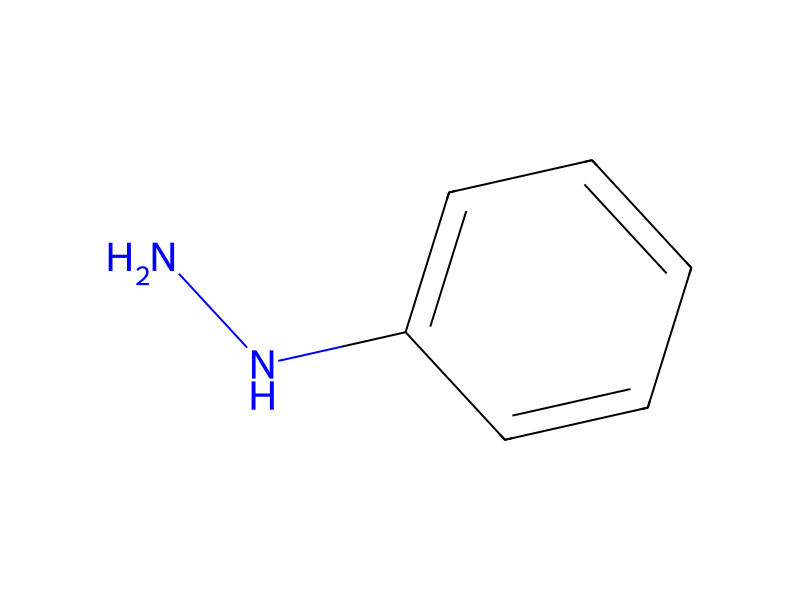

Product 1

Reagents, catalysts & solvents 1

Procedure
When a mixture of 127 g (1 mole) of caprolactim-methylether and 108 g (1 mole) of phenylhydrazine was heated from 140° to 200°C over the course of 6 hours, 34 g (theoretically 32 g of methanol) of a distillate with a pungent smell of ammonia passed over at boiling point 60° to 140°C. The distillation of the reaction product yielded, in addition to a first runnings of starting material and 35 g of distillation residue, 92 g of caprolactam-phenylhydrazone of boiling point 125°C/0.1 mm Hg, in the form of a yellow crystalline mass which assumed a resinous brown discoloration in air. The yield was only 45.5% of theory.
Workup
- distillationThe distillation of the reaction product
Sources & evidence
- ORD record
- ord-6ad55e448c2c48ad9f51b2fdc5554069
- Source dataset
- uspto-grants-1976_02
- Patent number
- US03936444
Reaction notes
Loading…