Ethanol → HCID 21559438, compound
Reaction equation

[CH:1](=[O:5])[CH:2]([CH3:4])[CH3:3].C(O)C.[F:9][C:10]([F:14])([F:13])[S:11]Cl>ClCCl>[F:9][C:10]([F:14])([F:13])[S:11][C:2]([CH3:4])([CH3:3])[CH:1]=[O:5]Participants
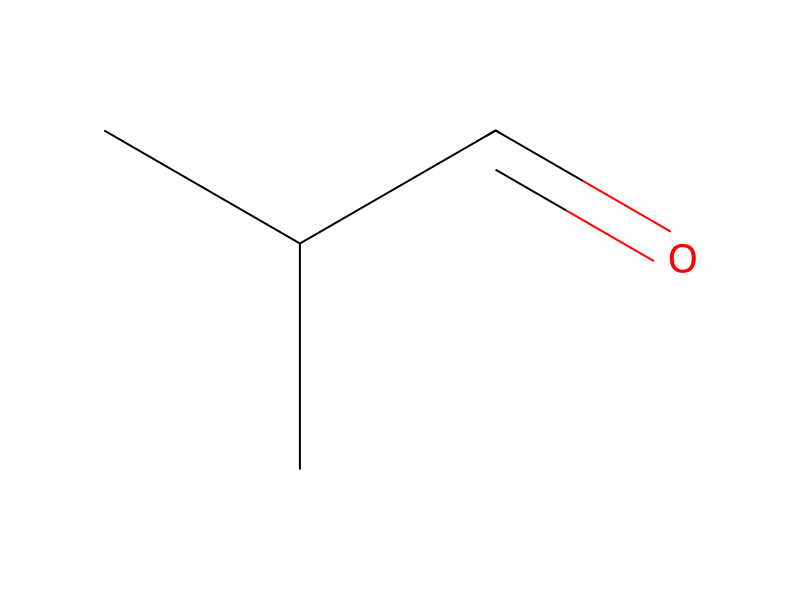
Reactant 3


Product 1

Reagents, catalysts & solvents 1

Conditions
- Temperature
- -78 °C
Procedure
A mixture of isobutyraldehyde (0.25 mole), ethanol (0.4 g) and dichloromethane (75 ml) was placed in a three-necked flask fitted with a gas inlet tube, a Dry Ice condenser and a gas outlet tube connected to a gas trap cooled to -78°C. Trifluoromethanesulfenyl chloride (0.22 mole) was added to the cold solution which was maintained under a nitrogen atmosphere. (Caution: It should be noted that trifluoromethanesulfenyl chloride is a highly hazardous material which must be handled with care to avoid inhalation or contact with the skin.) The reaction mixture was then allowed to warm to about 25°C and stirred magnetically until the orange colored solution had become nearly colorless (about 6 hours). The reaction mixture was then distilled. The distillation assembly was connected to a -78°C gas trap to trap any unreacted trifluoromethylsulfenyl chloride. The 2-trifluoromethylthio-2-methylpropionaldehyde, b.p. 108°-116°C was identified by spectral and elemental analyses of a purified sample, b.p. 116°C.
Workup
- customwas placed in a three-necked flask
- customfitted with a gas inlet tube, a Dry Ice condenser and a gas outlet tube
- customconnected to a gas trap
- temperaturewas maintained under a nitrogen atmosphere
- temperatureto warm to about 25°C
- custom(about 6 hours)
- distillationThe reaction mixture was then distilled
- distillationThe distillation
- customassembly was connected to a -78°C
Sources & evidence
- ORD record
- ord-72c10ed24fea47b58481d8a4ebf47829
- Source dataset
- uspto-grants-1976_02
- Patent number
- US03937738
Reaction notes
Loading…