1-Nitroanthraquinone → 1-Aminoanthraquinone
Reaction equation

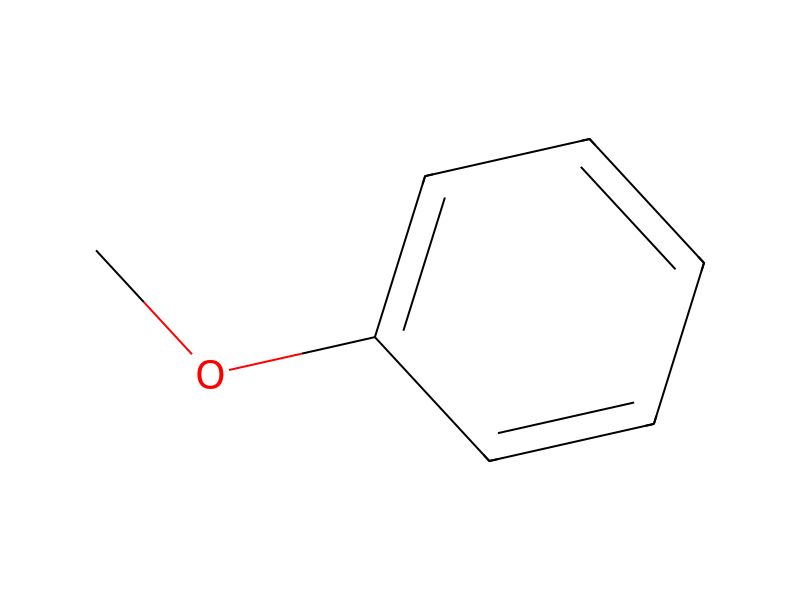
C1(OC)C=CC=CC=1.[N+:9]([C:12]1[C:25]2[C:24](=[O:26])[C:23]3[C:18](=[CH:19][CH:20]=[CH:21][CH:22]=3)[C:17](=[O:27])[C:16]=2[CH:15]=[CH:14][CH:13]=1)([O-])=O.[H][H].ONC1C2C(=O)C3C(=CC=CC=3)C(=O)C=2C=CC=1>[Pd]>[NH2:9][C:12]1[C:25]2[C:24](=[O:26])[C:23]3[C:18](=[CH:19][CH:20]=[CH:21][CH:22]=3)[C:17](=[O:27])[C:16]=2[CH:15]=[CH:14][CH:13]=1Participants
Reactant 4



Product 1

Reagents, catalysts & solvents 1

Procedure
300 Parts by weight of anisole are mixed with 27 parts of (97 percent) 1-nitroanthraquinone and 0.2 parts by weight of a palladium/charcoal catalyst (5 percent of Pd on active charcoal) and heated to 130° in an autoclave. At this temperature, hydrogen is blown through until the rate of up-take of the hydrogen has fallen to 10 percent of the original value. At this stage, about 2 percent of overhydrogenated product is present (ascertained by TLC). After interruption of the hydrogen supply, at 130°, 0.4 parts by weight of 1-hydroxylaminoanthraquinone are added and stirring is effected for 30 minutes. The catalyst is separated off at the upper temperature, the filtrate is concentrated and cooled and the 1-aminoanthraquinone is filtered off. No nuclear hydrogenated 1-aminoanthraquinone is present in the mother liquor. 23 Parts of 97 percent pure 1-aminoanthraquinone is obtained.
Workup
- temperatureheated to 130° in an autoclave
- customThe catalyst is separated off at the upper temperature
- concentrationthe filtrate is concentrated
- temperaturecooled
- filtrationthe 1-aminoanthraquinone is filtered off
Sources & evidence
- ORD record
- ord-bf4a71e9d9cb4c44ad1d4098d73c0735
- Source dataset
- uspto-grants-1976_01
- Patent number
- US03931253
Reaction notes
Loading…