4-Aminobenzoic Acid → 4-(2-phenyl-4,5,6,7-tetrahydro-1H-indol-1-yl)benzoic acid
Reaction equation

[CH2:1]([CH:10]1[CH2:15][CH2:14][CH2:13][CH2:12][C:11]1=O)[C:2]([C:4]1[CH:9]=[CH:8][CH:7]=[CH:6][CH:5]=1)=O.[NH2:17][C:18]1[CH:26]=[CH:25][C:21]([C:22]([OH:24])=[O:23])=[CH:20][CH:19]=1>C(O)(=O)C>[C:22]([C:21]1[CH:25]=[CH:26][C:18]([N:17]2[C:11]3[CH2:12][CH2:13][CH2:14][CH2:15][C:10]=3[CH:1]=[C:2]2[C:4]2[CH:5]=[CH:6][CH:7]=[CH:8][CH:9]=2)=[CH:19][CH:20]=1)([OH:24])=[O:23]Participants
4
Reactant 2
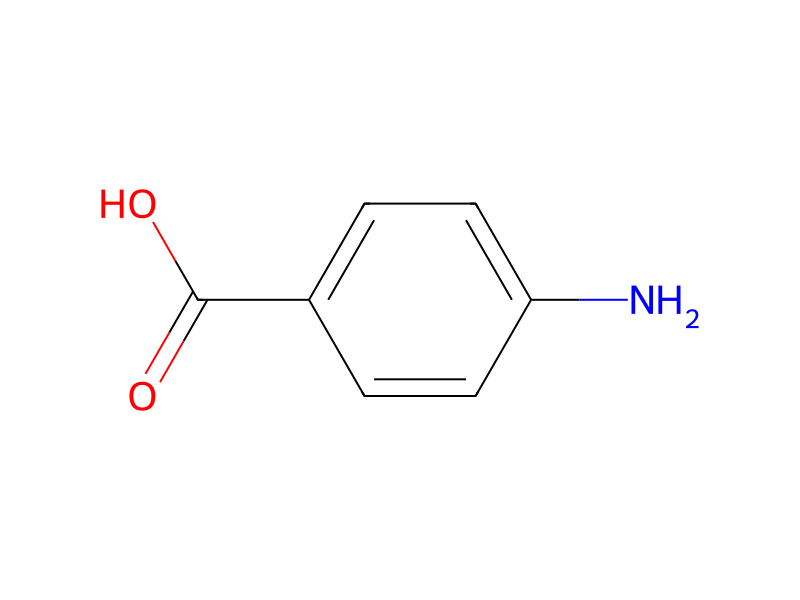

Product 1

Reagents, catalysts & solvents 1

Procedure
A solution of 10.8 g. (0.05 mole) of 2-phenacylcyclohexanone, 6.85 g. (0.05 mole) of p-aminobenzoic acid and 30 ml. of glacial acetic acid was heated under reflux for 5 hours and cooled. The solid which separated was collected and recrystallized from ethanol to provide 5.85 g. (37%) of pale yellow crystals, m.p. 244°-246°.
Workup
- temperatureunder reflux for 5 hours
- temperaturecooled
- customThe solid which separated
- customwas collected
- customrecrystallized from ethanol
- customto provide 5.85 g
Sources & evidence
- ORD record
- ord-89efef959bb24191b0390427ec7072a7
- Source dataset
- uspto-grants-1976_01
- Patent number
- US03931407
Reaction notes
Loading…