Acetonitrile → HCID 86732911, compound
Reaction equation

[O:1]=[CH:2][C:3]([Cl:6])([Cl:5])[Cl:4].[Cl:7][C:8]1[CH:13]=[CH:12][C:11]([N:14]=[C:15]=[O:16])=[CH:10][CH:9]=1.C(#N)C.[Cl-].[Li+]>CN(C)C=O.C1(C)C=CC=CC=1>[O:1]=[CH:2][C:3]([Cl:6])([Cl:5])[Cl:4].[Cl:7][C:8]1[CH:13]=[CH:12][C:11]([N:14]=[C:15]=[O:16])=[CH:10][CH:9]=1Participants
Reactant 4


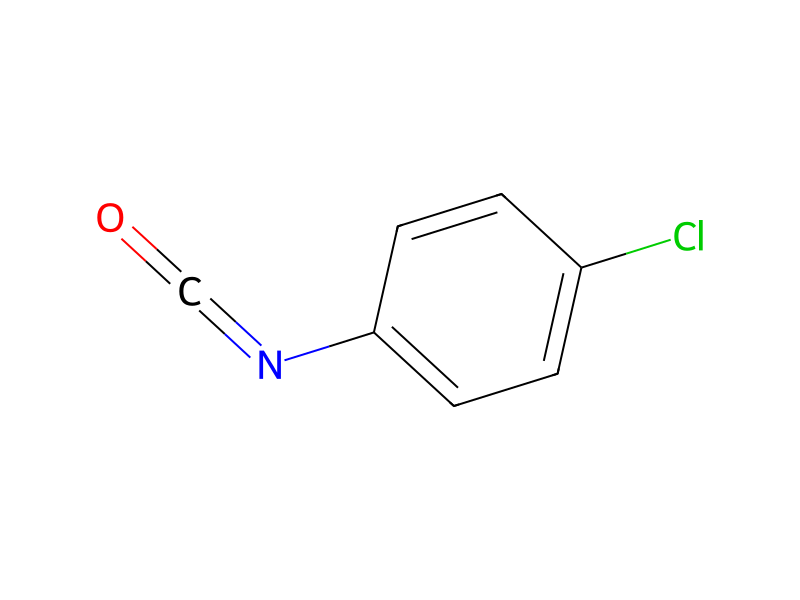

Product 1

Reagents, catalysts & solvents 2


Conditions
- Temperature
- 50 °C
Procedure
In each of the following examples the indicated amounts of chloral and p-chlorophenyl isocyanate were combined and to this solution was added 0.2 ml. of dimethylformamide and 0.8 ml. of acetonitrile. The resulting solution was heated to 50°C. and thoroughly mixed with the amount of initiator solution (1 molar lithium chloride in dimethylformamide) indicated. The quiescent mixture was then cooled without agitation to the temperature shown for the period indicated. The resulting polymerizate was dissolved in toluene. The solution was clarified by filtration and the filtrate poured into a large excess of methanol to precipitate the chloral/p-chlorophenyl isocyanate copolymer. After being washed thoroughly with methanol, the product was dried, weighed, and analyzed for nitrogen content, from which the mole percent of ##EQU9## groups and chloral groups in the copolymer was calculated.
Workup
- additionwas added 0.2 ml
- temperatureThe quiescent mixture was then cooled without agitation to the temperature
- filtrationThe solution was clarified by filtration
- additionthe filtrate poured into a large excess of methanol
- customto precipitate the chloral/p-chlorophenyl isocyanate copolymer
- washAfter being washed thoroughly with methanol
- customthe product was dried
Sources & evidence
- ORD record
- ord-0c44e69223b443f68fd36fb705697805
- Source dataset
- uspto-grants-1976_01
- Patent number
- US03932318
Reaction notes
Loading…