Pyridine → HCID 131709934, compound
Reaction equation

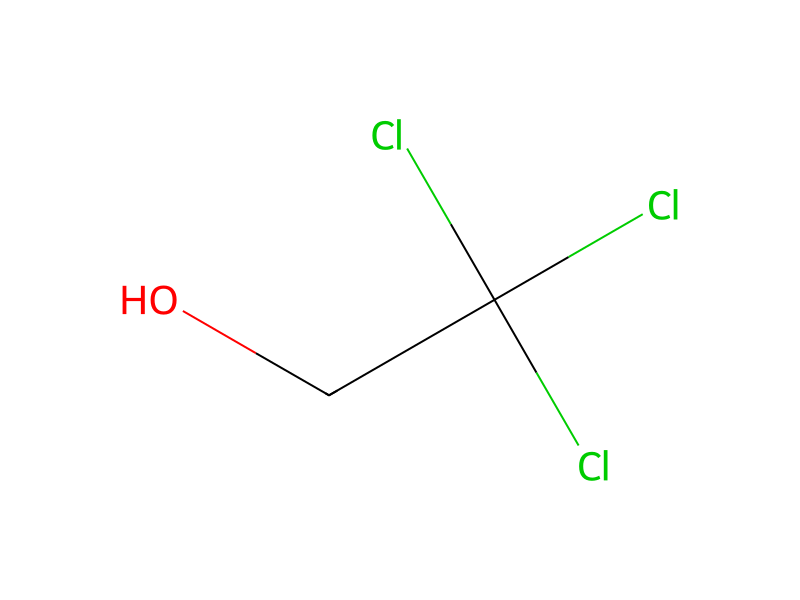
[CH3:1][O:2][C:3]1[C:12]2[C:7](=[CH:8][CH:9]=[CH:10][CH:11]=2)[C:6]([CH2:13][C:14]2[CH:19]([C:20]([OH:22])=[O:21])[N:18]3[C:23](=[O:35])[C@@H:24]([NH:25][C:26](=[O:34])[CH2:27][C:28]4[CH:33]=[CH:32][CH:31]=[CH:30][CH:29]=4)[C@H:17]3[S:16][CH:15]=2)=[CH:5][CH:4]=1.N1C=CC=CC=1.[Cl:42][C:43]([Cl:47])([Cl:46])[CH2:44]O.C1(N=C=NC2CCCCC2)CCCCC1>C(Cl)Cl>[Cl:42][C:43]([Cl:47])([Cl:46])[CH2:44][O:21][C:20]([CH:19]1[N:18]2[C:23](=[O:35])[C@@H:24]([NH:25][C:26](=[O:34])[CH2:27][C:28]3[CH:33]=[CH:32][CH:31]=[CH:30][CH:29]=3)[C@H:17]2[S:16][CH:15]=[C:14]1[CH2:13][C:6]1[C:7]2[C:12](=[CH:11][CH:10]=[CH:9][CH:8]=2)[C:3]([O:2][CH3:1])=[CH:4][CH:5]=1)=[O:22]Participants
Reactant 4



Product 1

Reagents, catalysts & solvents 1

Procedure
A solution of 10.9 g of 3-(4-methoxy-1-naphthylmethyl)-7β-phenylacetylamino-ceph-2-em-4ξ-carboxylic acid in 300 ml of methylene chloride is treated with 1.80 ml of pyridine, then successively with 2.50 ml of 2,2,2-trichloroethanol in 20 ml of methylene chloride and 4.95 g of dicyclohexylcarbodiimide in 40 ml of methylene chloride. The addition of the reagents is carried out at room temperature and while stirring. The reaction mixture is stirred for 20 hours at room temperature, freed from dicyclohexylurea by means of filtration and the filtrate is evaporated under reduced pressure. The residue is taken up in ethyl acetate and mixed with an aqueous dipotassium hydrogen phosphate buffer solution (pH 7.5). The aqueous portion is separated, washed several times with ethyl acetate and the pH adjusted to 2.5 with 20% aqueous phosphoric acid. After repeated extraction with ethyl acetate, the organic extracts from the aqueous phase having pH 2.5 are combined, washed with water and a saturated aqueous sodium chloride solution, dried over magnesium sulphate and evaporated under reduced pressure. The residue is chromatographed on 450 g of silica gel, elution being carried out with methylene chloride containing 5% of methyl acetate, fractions of 500 ml being taken. The residue of the fractions 12-13 is crystallised from ethyl acetate and yields the 3-(4-methoxy-1-naphthylmethyl)-7β-phenylacetylamino-ceph-2-em-4ξ-carboxylic acid 2,2,2-trichloroethylester, which melts at 145-147°; [α]D20 = + 271° ± 1° (c = 0,918 in chloroform); ultraviolet absorption spectrum (in methanol): λmax = 210 mμ (ε = 67000), 232 mμ (ε = 41200), 298 mμ (ε = 9990) and 322 mμ (ε = 4960); infrared absorption spectrum (in mineral oil): characteristic bands at 2,90μ, 5,62μ, 5,68μ, 6,02μ, 6,27μ and 6,60μ; thin-layer chromatogram (silica gel): Rf = 0.27 (system: toluene/ethyl acetate 4:1) and Rf = 0.38 (system: toluene/acetone 9:1).
Workup
- additionThe addition of the reagents
- customis carried out at room temperature
- stirringThe reaction mixture is stirred for 20 hours at room temperature
- filtrationfreed from dicyclohexylurea by means of filtration
- customthe filtrate is evaporated under reduced pressure
- additionmixed with an aqueous dipotassium hydrogen phosphate buffer solution (pH 7.5)
- customThe aqueous portion is separated
- washwashed several times with ethyl acetate
- extractionextraction with ethyl acetate
- washwashed with water
- dry with materiala saturated aqueous sodium chloride solution, dried over magnesium sulphate
- customevaporated under reduced pressure
- customThe residue is chromatographed on 450 g of silica gel, elution
- customThe residue of the fractions 12-13 is crystallised from ethyl acetate
Sources & evidence
- ORD record
- ord-b9e12aaad0484b159ae1d4abd9769a26
- Source dataset
- uspto-grants-1976_01
- Patent number
- US03932465
Reaction notes
Loading…