Phenylhydrazine → 1-[beta-(2-Methyl-3-indolyl)propionyl]-4-phenylpiperazine
Reaction equation

[C:1]1([NH:7]N)[CH:6]=[CH:5][CH:4]=[CH:3][CH:2]=1.[C:9]([CH2:12][CH2:13][CH2:14][C:15]([N:17]1[CH2:22][CH2:21][N:20]([C:23]2[CH:28]=[CH:27][CH:26]=[CH:25][CH:24]=2)[CH2:19][CH2:18]1)=[O:16])(=O)[CH3:10]>C(O)(=O)C>[CH3:10][C:9]1[NH:7][C:1]2[C:6]([C:12]=1[CH2:13][CH2:14][C:15]([N:17]1[CH2:22][CH2:21][N:20]([C:23]3[CH:24]=[CH:25][CH:26]=[CH:27][CH:28]=3)[CH2:19][CH2:18]1)=[O:16])=[CH:5][CH:4]=[CH:3][CH:2]=2Participants
4
Reactant 2
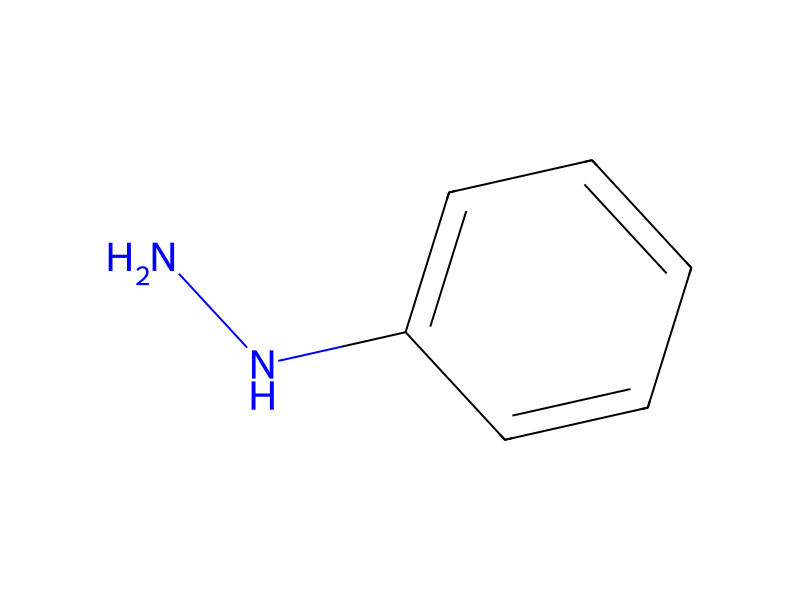

Product 1

Reagents, catalysts & solvents 1

Procedure
To a solution of 10.8 g of phenylhydrazine in 100 ml of 30 % aqueous acetic acid was added 27.4 g of 1-(γ-acetylbutyryl)-4-phenylpiperazine and the resulting mixture was stirred for 30 minutes at room temperature. The precipitate was filtered, and washed with water. The precipitate was added to 180 ml of 5 % ethanolic hydrogen chloride, and the mixture was heated under reflux for 4 hours. The solvent was distilled off under reduced pressure to the residue, to which was added 100 ml of water. The resulting solid substance was recrystallized from ethanol to give 1-[β-(2-methyl-3-indolyl)propionyl]-4-phenylpiperazine, melting at 120°-121°C.
Workup
- filtrationThe precipitate was filtered
- washwashed with water
- additionThe precipitate was added to 180 ml of 5 % ethanolic hydrogen chloride
- temperaturethe mixture was heated
- temperatureunder reflux for 4 hours
- distillationThe solvent was distilled off under reduced pressure to the residue, to which
- additionwas added 100 ml of water
- customThe resulting solid substance was recrystallized from ethanol
Sources & evidence
- ORD record
- ord-a3f3562bf4ed4ef38fee530db75cd8bb
- Source dataset
- uspto-grants-1976_01
- Patent number
- US03933824
Reaction notes
Loading…